
Home Plumbing Services in Portland: When to Call a Pro and Expected Costs
Facing a drip, clog, or a burst pipe in Portland? Knowing when to call for home plumbing services can save your walls and your wallet. This practical guide shows which problems are true emergencies, typical local cost ranges and permit impacts, and how to vet licensed plumbers near me so you hire the right pro and prepare your home before they arrive.
1. Immediate plumbing emergencies and what to do first
If water is actively flooding living space or sewage is coming up, treat the situation as an immediate emergency. Active flooding, a visible burst pipe, sewage backup, or a strong gas smell require swift action to limit structural damage and health risk.
Immediate actions to take before help arrives
- Shut off the main water valve. Stopping the water is the single most effective way to limit damage – know the valve location ahead of time or turn the meter wheel at the street if you must.
- Isolate the fixture. If the leak is under a sink or at a toilet, use the fixture shutoff valves to avoid cutting the entire house off when possible.
- Turn off electricity in wet areas if it is safe to access the breaker. Water and live circuits are lethal; evacuate and call an electrician if you cannot safely reach the panel.
- Stop using affected plumbing. Avoid flushing toilets or running appliances during a sewage backup to prevent contamination and spread.
- Evacuate and report gas smells. For a gas odor, get people and pets outside, then call the gas utility first – do not try to isolate gas lines yourself.
Practical limitation to understand: shutting off water prevents more water damage but may interrupt sanitation, heating, or fire suppression systems. Balance immediate damage control with basic needs such as drinking water and toilet access for household members or tenants.
What to tell the dispatcher when you call emergency plumbing services. Give a clear location, a concise description of the problem, whether there is a gas smell, whether electricity is shut off in flooded areas, and whether the main water has been shut. If possible, text or email a photo before the crew arrives to speed triage.
On after-hours costs and response expectations. In Portland, after-hours emergency call fees commonly range from 150 to 350 in addition to hourly labor; standard hourly rates during business hours are generally in the 75 to 150 range according to cost guides such as HomeAdvisor and Angi. Expect the plumber to charge for trip time, parts, and any permit work if the emergency reveals broader issues.
Tradeoff to accept in emergencies. A quick temporary repair by a pro – for example a clamp or a stopgap reroute – will limit damage and buy time to plan a permanent repair, but temporary fixes can increase total cost if the underlying pipe or sewer line still needs full replacement later. Accept the stopgap if immediate damage control is the priority, and insist on a written plan and cost estimate for the permanent fix.
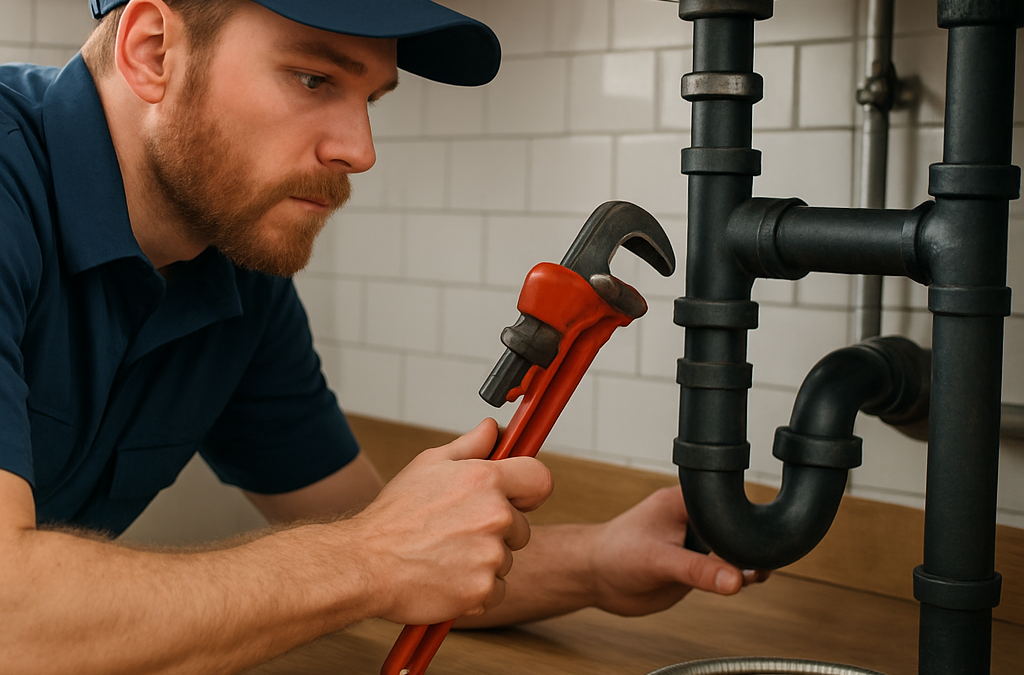
Concrete Example: A morning burst pipe under a kitchen sink dumped several inches of water into the cabinet and onto the floor. The homeowner shut the main valve, turned off the circuit for the kitchen, took photos, then called 24/7 emergency plumbing assistance. The arriving technician isolated the broken copper run with a clamp and recommended a same-day partial repipe because the house had multiple pinhole leaks from copper corrosion.
2. Non-emergency problems that merit a professional within days
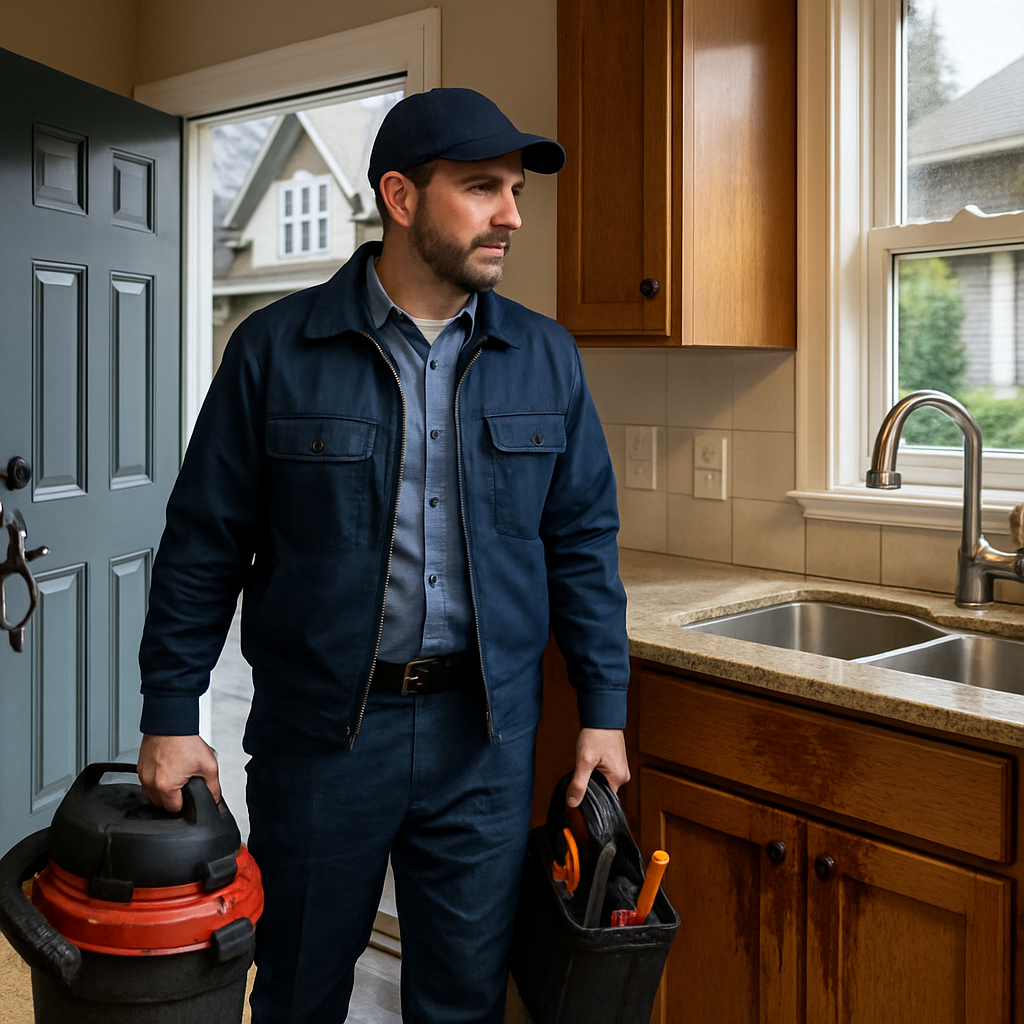
Key point: Not every persistent leak or clog requires an immediate emergency call, but recurring problems that resist basic DIY fixes should be scheduled with a licensed pro within 48 to 72 hours to avoid escalation.
Common non-emergency signs to act on promptly
- Slow drains that return: A sink or tub that clears with a plunger or bottle cleaners but clogs again within days signals a deeper blockage or mainline issue.
- Low pressure across multiple fixtures: If several taps are weak at the same time, this often points to supply line problems, a failing pressure regulator, or partial mainline restriction.
- Water stains or mildew without active flooding: Discoloration on walls, ceilings, or baseboards usually means a hidden leak that will worsen and promote mold if left alone.
- Intermittent appliance or under-sink leaks: Small drips under a dishwasher, washing machine, or sink fitting that come and go indicate failing connectors or loose fittings that can detach.
- Noisy or sputtering hot water system: Rumbles, banging, or irregular hot water delivery can be a sign of sediment buildup, failing elements, or impending heater failure that is not yet catastrophic.
Practical tradeoff: Scheduling a weekday visit saves you from higher after-hours premiums and gives the plumber time to plan proper diagnostics such as a camera inspection. That said, delaying longer than a few days increases the risk of structural damage or a backup that will convert a simple service call into a large repair job.
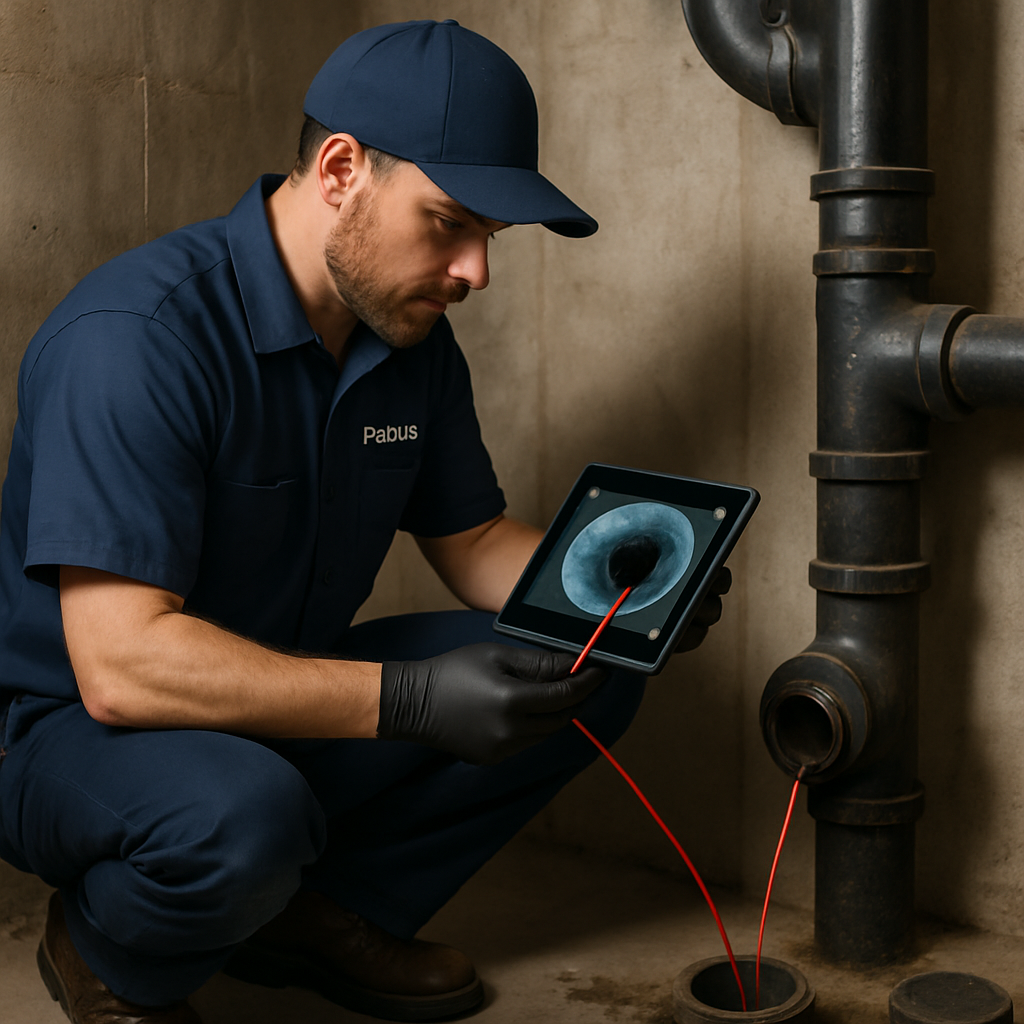
Concrete Example: A renter in inner Northeast Portland had a kitchen sink that kept clogging after plunging. The plumber ran a camera, found root intrusion in the lateral, and advised hydro jetting followed by a scheduled spot repair. The owner chose jetting to clear the line quickly and avoid multiple service calls, even though a targeted repair would be added later if roots returned.
Judgment you can use: Chemical drain cleaners and coat hanger tricks provide cosmetic relief and can damage older pipe materials. In practice, a one-time camera inspection is often the best value because it tells you whether a cleaning, trenchless repair, or repipe is required. For sewer work consider trenchless options when the line condition and access make them viable, but accept that older clay or compromised pipes sometimes need conventional excavation.
When you call, give the technician concise history to speed diagnosis: how often the problem occurs, what DIY steps you tried, whether multiple fixtures are affected, appliance model numbers if relevant, and any access restrictions or tenant schedules. This simple prep reduces return trips and keeps quotes accurate.
Next consideration: After you schedule, ask for a diagnostic plan that lists likely fixes, whether a camera inspection is included, expected permit needs for sewer or heater work, and an estimate range so you can compare bids confidently.
3. Typical home plumbing jobs and Portland cost ranges
Practical reality: Portland homeowners repeatedly call for the same handful of jobs — drain cleaning, toilets, water heaters, sewer work, slab leaks, repipes, and basic fixture installs. Knowing the local cost band for each job helps decide whether to schedule standard service, budget for a replacement, or plan a permit-driven project with a licensed contractor.
Common jobs, typical Portland ranges, and what changes the price
| Service | Typical Portland range | Why price varies / when to hire a pro |
|---|---|---|
| Drain cleaning (sink to mainline) | $100 to $400 | Access, root intrusion, and need for camera or hydro jetting increase cost; call a pro when problem returns after plunging or affects multiple fixtures. |
| Toilet repair or replacement | Repair $120 to $350 · Replacement $250 to $700 | Flange damage, wall access, or replacing with a specialty toilet raise labor. |
| Water heater service and replacement | Repair $150 to $700 · Tank replace $800 to $2,500 · Tankless install $1,500 to $4,000 | Permits, gas line work, venting, and efficiency upgrades drive cost; rebates can offset replacements. |
| Sewer line work | Spot repair $1,000 to $6,000 · Full replace $3,000 to $15,000 | Method (trenchless vs open), depth, and landscaping disruption are the main cost drivers. |
| Slab leak repair | $1,500 to $8,000 | Location under slab and whether rerouting supply or cutting slab is required determine price. |
| Repiping (partial to whole house) | Partial $2,000 to $8,000 · Whole-house $4,000 to $15,000 | Material choice – PEX lowers material and labor vs copper – and wall access affect totals. |
| Fixture & appliance installs | Faucet $120 to $400 · Disposal $150 to $400 · Dishwasher hook-up $100 to $300 | Existing fittings, shutoffs, and countertop or cabinet work change the quote. |
Insight: A modest upfront diagnostic – typically a camera inspection or focused troubleshooting fee – often saves money by ruling out unnecessary full replacements. In practice, homeowners who skip diagnostics pick the cheapest replacement quote and later discover the issue was localized and resolvable for much less.
Tradeoff to weigh: Choosing trenchless sewer repair minimizes landscape damage but costs more upfront than a targeted local dig when the failure is short. Conversely, a very low bid that excludes permits or inspection work creates risk of failed final inspection and expensive rework; always ask whether permit fees are included in the estimate.
Concrete example: A Southeast Portland homeowner had repeated kitchen backups. A camera run showed root intrusion 20 feet from the house. The contractor offered hydro jetting for immediate clearance and lining the affected section later. The owner chose jetting first to stop recurring blockages and budgeted lining for the next dry season once landscaping disruption and permits were planned.
Next consideration: When you get estimates, compare scope and permit handling rather than headline price. A clear scope and permit plan reduces surprises and keeps the project on schedule with local code requirements.
4. Factors that affect cost and timeline in Portland
Direct point: When booking home plumbing services in Portland, the sticker price is only the visible part of the bill – access, materials, permits, and seasonality usually determine whether a one-day job becomes a multi-week project.
Access and construction type
Impact: Jobs in older Portland houses with plaster walls, narrow crawlspaces, or slab foundations increase labor hours and specialty work. Breaking concrete, chasing pipes through plaster walls, or working in a tight crawlspace is slow and expensive.
Material choices and long term tradeoffs
Tradeoff: PEX is faster to install and usually cheaper up front than copper, but copper still has advantages for gas lines and when you need to tie into existing copper runs. Choose based on lifespan, compatibility with existing plumbing, and local resale expectations rather than headline price alone.
Permits, inspections, and City of Portland procedures
Practical constraint: Many jobs – water heater replacements, sewer work, and major repipes – require permits and inspections from the City of Portland. That adds scheduling steps and often several business days to the timeline. See permit rules at City of Portland permits so you know what the contractor must handle.
Sewer-specific drivers – roots, depth, and trenchless feasibility
Judgment: Root intrusion is the single most frequent reason a sewer job gets expensive. When roots are the issue, hydro jetting can be a short-term fix but trenchless lining or pipe bursting is usually the only reliable long-term solution. Trenchless methods reduce landscape damage but are not a fit for every pipe condition.
Timing and parts availability: After-hours or weekend emergency calls add premium labor rates and sometimes surge pricing for parts. Vintage fixtures or discontinued fittings create delays while parts are sourced or adapted – plan for extra lead time on older homes.
Good estimates separate diagnostics, labor, materials, permit fees, and optional work. If a quote bundles everything, ask for the line items so you can compare accurately.
Concrete Example: A Southeast Portland homeowner found a slow leak under a slab. The plumber offered two paths – cut and repair the slab now, which required same-day concrete work and a longer permit sequence, or reroute the hot and cold lines above slab as a staged repair to stop the damage and schedule a trenchless sewer assessment later. The staged route reduced immediate disruption and let the owner time the permit inspection and landscaping work, but it did add a second mobilization cost.
5. How to vet and hire a Portland plumber
Start with verification, not salesmanship. When you search for home plumbing services locally, the first filter should be factual: valid contractor license, current insurance, and a record of pulling permits in Portland for similar jobs. These three items separate legitimate professional plumbing contractors from well-intentioned handymen or fly-by-night operators who create downstream risk.
Practical vetting steps
Check credentials: Ask for a license number and confirm it through the City of Portland permit portal or the Oregon Construction Contractors Board. Licensed plumbers near me that cannot produce a verifiable license are not a bargaining chip.
Confirm insurance and bonding: Request proof of general liability and workers compensation. If a tech is injured on your property or a repair causes damage, you want the contractor to carry the cost, not your homeowner policy or you.
Get the estimate in writing and itemized. Insist the quote separates diagnostics, parts, labor, permit fees, and optional upgrades like trenchless methods or hydro jetting. That makes change orders transparent and lets you compare bids on apples-to-apples terms.
- Must-have items in a written quote: license number, insurance proof, scope of work, permit responsibility, warranty length, after-hours premium if emergency plumbing services are used.
- Ask about in-house capability: confirm whether the company owns equipment like a camera system or hydro jetter rather than subcontracting those parts of the job.
- Service-level expectations: response window for emergencies, normal business-hour ETA for diagnostics, and whether a follow-up visit is included in the warranty.
Reality check on price vs. value. The lowest bid often omits permit handling or uses cheaper parts with short warranties. Paying a moderate premium to a contractor who will pull permits, provide a written warranty, and stay on site until the inspection passes is usually cheaper than rework or failed inspections later.
Local references beat broad-star reviews. Ask for two recent jobs in Portland with similar scope and call the property owner if possible. Projects in comparable neighborhoods reveal how a contractor handles permits, landscaping disruption, and final cleanup.
Subcontracting and warranties matter. If a company subcontracts the work, confirm who is responsible for the warranty and who will manage permit inspections. In practice, firms that do the work themselves take clearer accountability; subcontracted crews can create finger-pointing when problems appear.
Concrete Example: A homeowners association hired the cheapest bidder for a building repipe and later discovered the contractor had not pulled required City of Portland permits. The city required partial tear-out and reinspection, forcing the HOA to pay additional mobilizations. The higher-rated local contractor who quoted more initially had included permit handling and a longer warranty, which would have avoided the extra expense.
Important: require a written scope that explicitly states who pulls permits and the warranty period. If a plumber resists, walk away.

6. Preparing for a service visit to reduce cost and speed repair
Small prep upfront usually saves money and time. Assemble the facts a plumber will need before they arrive: appliance model and serial numbers, any previous repair receipts, recent symptoms with timestamps, and whether this is a rental unit (have owner permission or HOA approval ready). If the job is likely to trigger a permit, note that now and have the property owner authorize permit pull so the tech can start paperwork quickly—see the City of Portland permit guidelines at City of Portland permits.
Physical access and site readiness
Clear and safe access matters more than you think. Move boxes, furniture, and stored items away from work areas, open gates or unlock utility closets, and make sure the route from driveway to the work area is passable for a cart or equipment. Provide a well-lit path and remove fragile items from nearby surfaces so techs can work without stopping to protect belongings.
One important tradeoff: spending an hour clearing cabinets and pulling a few boxes typically reduces the technician's labor time. But do not attempt invasive tasks yourself, like cutting access panels or attempting a gas shutoff without instructions from the utility—those are valid safety and liability limits you should leave to licensed plumbers or the utility.
Administrative prep that prevents return visits
Send photos and basic history before the visit. A short video of the leak pattern or a photo of the affected fitting lets the dispatcher route the crew with the right tools and parts. Photos shorten triage but do not replace diagnostic tools like a camera run. If you cannot be present, leave written authorization for a capped amount the tech can spend without calling back—this reduces additional trip charges but requires you to accept some risk of scope creep.
Have logistics in order. Contain pets, park a vehicle so trucks can get close, and have a preferred payment method ready. Renters should provide contact information for the owner or property manager and confirm who signs permits. These small details stop avoidable delays and second mobilizations that show up on your invoice.
Concrete Example: A Laurelhurst homeowner sent photos of a recurring under-sink drip and the faucet model before the scheduled visit, cleared the cabinet, and left a short authorization allowing up to a modest onsite parts replacement. The technician arrived pre-stocked, completed the repair without a return trip, and provided a written invoice separating diagnostics, parts, and permit work.
Practical judgment: be decisive about replacements that will be required soon. If a technician points out a failing part that will cause a repeat call within weeks, approving the replacement during the first visit often costs less than paying for diagnosis and a second mobilization. Conversely, refuse cookie-cutter replacements without a clear diagnostic that justifies them.
7. River City Plumbing in Portland: services, emergency availability, and what to expect
Straight answer: River City Plumbing offers full-spectrum home plumbing services across Portland including emergency plumbing services, drain cleaning services, water heater repair services, slab leak detection, sewer line repair services, repiping, and fixture installation. They operate as a licensed local contractor that keeps camera inspection gear and hydro jetting capability in-house, which matters for faster, accurate diagnostics and fewer subcontractor delays.
How they handle emergency calls versus scheduled work
On emergency calls: the dispatcher triages triage based on risk – active flooding, sewage backing up into the home, or a gas-related issue get priority and a dispatch window. For nonlife-threatening but urgent problems such as repeated backups or major leaks, they typically schedule the earliest daytime slot so diagnostics like a camera run or leak detection can be done properly rather than a temporary bandage that causes a return visit.
Practical insight and tradeoff: having a firm that owns its equipment usually costs a bit more per hour but reduces total cost and time by avoiding subcontractor scheduling and by enabling immediate diagnostics. Conversely, the cheapest emergency crew that only performs stopgap repairs can leave you with higher total costs because permanent repairs require a separate mobilization and permit work.
Concrete example: A homeowner in North Portland reported intermittent sewage odors and slow drains. River City Plumbing scheduled a daytime diagnostic, ran a camera through the cleanout, performed targeted hydro jetting to clear the line, and then recommended trenchless lining for the compromised section. They explained permit timing and staged the lining for a later date to allow the owner to plan landscape protection and budget for the permanent fix.
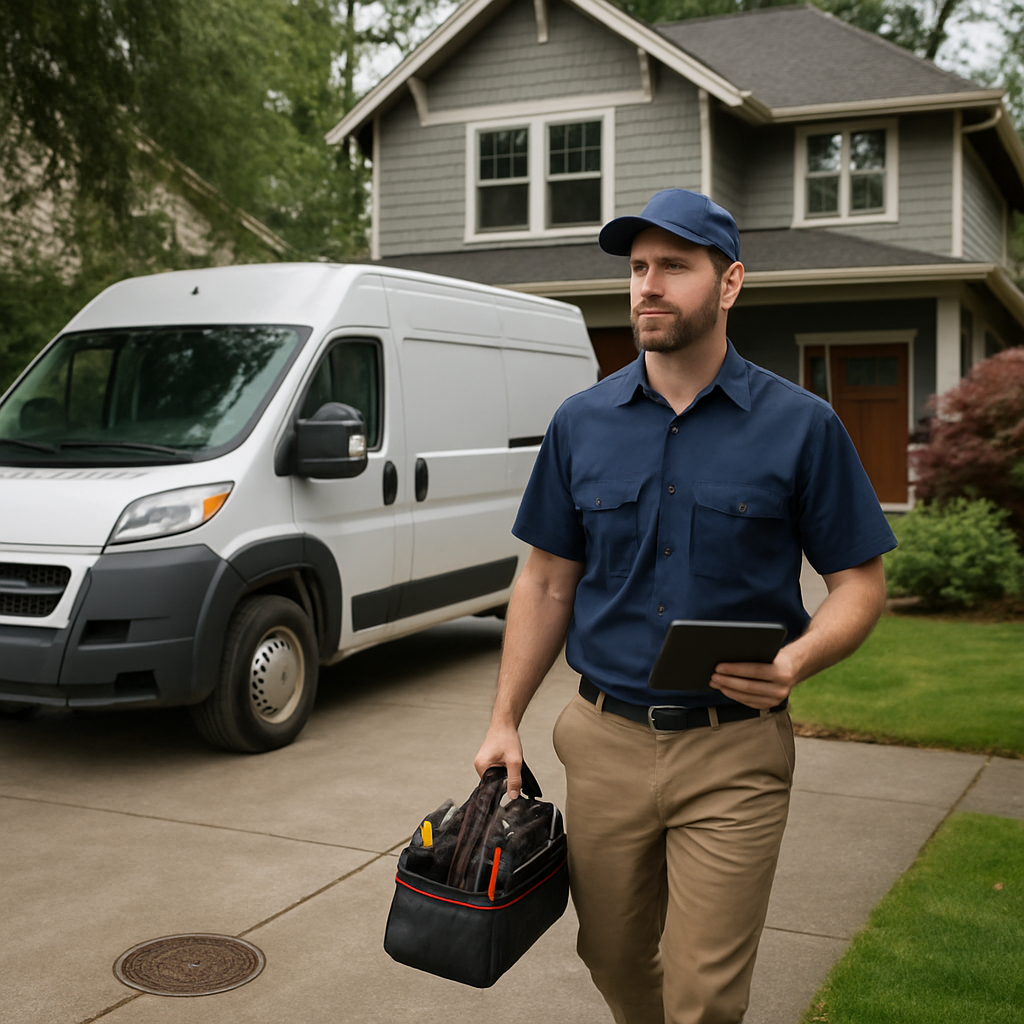
What to expect during a visit: technicians arrive with ID and license info, document the issue with photos or a short video, perform focused diagnostics, and present a written estimate that separates diagnostics, labor, materials, and any permit fees. They will also outline next steps if a temporary repair is performed – including a clear timeline and cost estimate for the permanent repair.
- Deliverables on the invoice: written scope, permit responsibility, warranty period, and photo documentation of the work
- Equipment advantage: in-house camera and hydro jetting lower the chance of surprise change orders
- Customer control: expect to be asked for an authorization limit for onsite parts to avoid extra trips
Judgment to use: insist on a written plan whenever you accept a temporary fix. Stopgap repairs are appropriate to stop damage, but they must be paired with a documented path to a permanent repair and a timeline for permits and inspections. If a contractor resists committing to that plan in writing, treat that as a red flag.
Next consideration: decide whether your issue needs immediate 24/7 plumbing assistance or a weekday diagnostic; if in doubt, document the symptoms and pictures now so the dispatcher can give an accurate dispatch window and estimate when you contact licensed plumbers near me.
8. Common scams and red flags to avoid
Straight warning: Scammers rely on pressure, plausible uniforms, and a low headline price to shut down scrutiny. Treat any on-the-spot urgency or insistence that you sign immediately as the first red flag—legitimate professional plumbing contractors prefer to verify scope and provide a short written estimate before major work.
- Doorstep urgency: Someone shows up claiming they just finished work nearby and found a problem at your house. This often leads to high-pressure instant repairs and no permit paperwork.
- Low-ball bid then change orders: An initial very cheap quote followed by multiple surprise add-ons once the crew is on site. Legit contractors will explain unknowns up front and list contingencies in writing.
- Cash-only or no-receipt asks: Requests for cash without an itemized invoice or refusal to accept card payments is a classic way to avoid traceable records and skip permits.
- Credential mismatch: A professional-looking truck does not equal a license. Watch for different company names on paperwork, no license number provided, or license numbers that fail online verification.
- Permit avoidance or fake permits: Some crews will promise to avoid permits to save you money, or produce forged paperwork. Both create legal risk and likely require rework.
- Unnecessary destruction: Scare tactics like cutting open walls or slabs to justify an expensive full replacement when a targeted repair or diagnostic would suffice.
Practical tradeoff: Paying for an up-front diagnostic such as a camera inspection or a short on-site evaluation costs money now but protects you from being sold an unnecessary full replacement. In practice, that diagnostic fee usually prevents far larger change orders and second mobilizations.
Concrete Example: A homeowner in inner Southeast accepted a quick low-price sewer repair from a crew who said they could start immediately. The crew performed a small patch, then reported additional hidden damage and demanded a much larger cash payment to finish. The homeowner stopped work, called a licensed contractor who verified the original crew had not pulled permits and performed a scoped camera inspection that revealed a fixable section rather than the claimed full replacement.
How to respond if something feels wrong
- Halt and document: Stop further work, take photos, and keep all receipts or notes of what was said and promised.
- Verify quickly: Ask for the license number and verify it through the City of Portland permit portal at City of Portland permits. A legitimate contractor will wait while you check.
- Demand paperwork: Require an itemized invoice, a permit number if the job needs one, and a written warranty before you pay the balance.
- Get a second opinion: Schedule a daytime diagnostic with a licensed local plumbing contractor for a fair comparison—if needed, see River City Plumbing contact to arrange a follow-up inspection.
Judgment you can use: Cheap and fast is rarely the right answer for anything that involves permits, sewer lines, or gas. Verifying credentials and paying for a short diagnostic are the simplest, most reliable antidotes to scams—and they usually save money and time compared with fixing a botched job later.