

Finding Trusted Plumbers in Beaverton, OR: Pricing, Reviews, and Local Tips
When a leak, clogged drain, or failing water heater forces you to act, finding trusted plumbers beaverton oregon residents can call becomes urgent and confusing. This short guide gives local price benchmarks, a step by step vetting checklist, and Beaverton-specific tips on permits, emergency response, and reading reviews so you can compare quotes and hire with confidence.
Where Beaverton residents should start looking for plumbers
Start with a narrow search and a purpose. If you need a quick service call or an emergency, prioritize visible indicators of availability and recent local work rather than the highest star rating alone. For routine repairs or remodel quotes, focus on companies that publish clear service areas and written estimate practice.
Quick local channels to check first
- Google Local Pack: Use the map results for plumbers beaverton oregon, filter by open now, and scan business hours plus recent photos to judge activity.
- Nextdoor and neighborhood threads: Real neighbor referrals surface who actually worked on houses near yours – treat them as leads to verify, not final endorsements.
- Beaverton Chamber and local directories: These will often list licensed businesses that do routine commercial plumbing and residential work in the city.
- Word of mouth from neighbors or property managers: Ask about punctuality, cleanup, and whether the company honored warranty work.
Practical tradeoff: Nextdoor referrals are fast and locally relevant but small sample sizes can exaggerate both praise and complaints. Google results favor companies that invest in local SEO, which helps when you need 24/7 plumbing services Beaverton but does not guarantee fair pricing or licensing. Use both sources to build a short list of 2 to 4 candidates to vet.
Use public records as a reality check. Check recent permit pulls on the City of Beaverton building page to see which plumbing contractors are actually doing work similar to yours. This reveals who is trusted enough to get permits and who is doing larger remodels or sewer jobs nearby. See City of Beaverton building and permits.
Concrete example: A homeowner two blocks from downtown Beaverton used a Nextdoor referral to contact a local company for a clogged drain. They then checked that company in Google Maps for same-day availability and looked up recent water heater permits on the city site before booking. The result was a faster response and fewer surprises on the final invoice.
Judgment call you will make in practice: For emergencies, prioritize confirmed availability and clear emergency surcharges up front. For non urgent work, favor contractors who show permit history and transparent written-estimate policies. National franchises show up first at night; local plumbers often give clearer answers on pricing and warranty for complex residential plumbing Beaverton jobs.
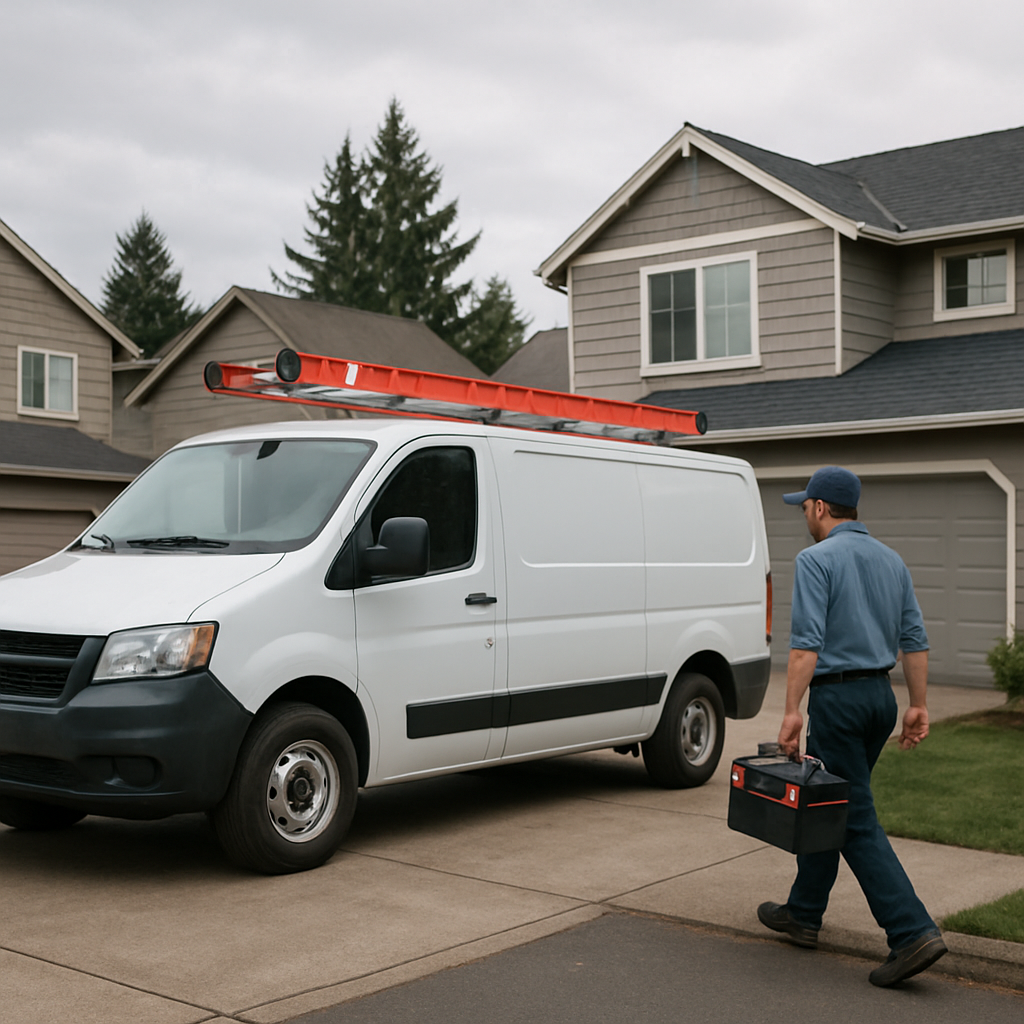
How to verify a plumber is licensed and insured in Oregon
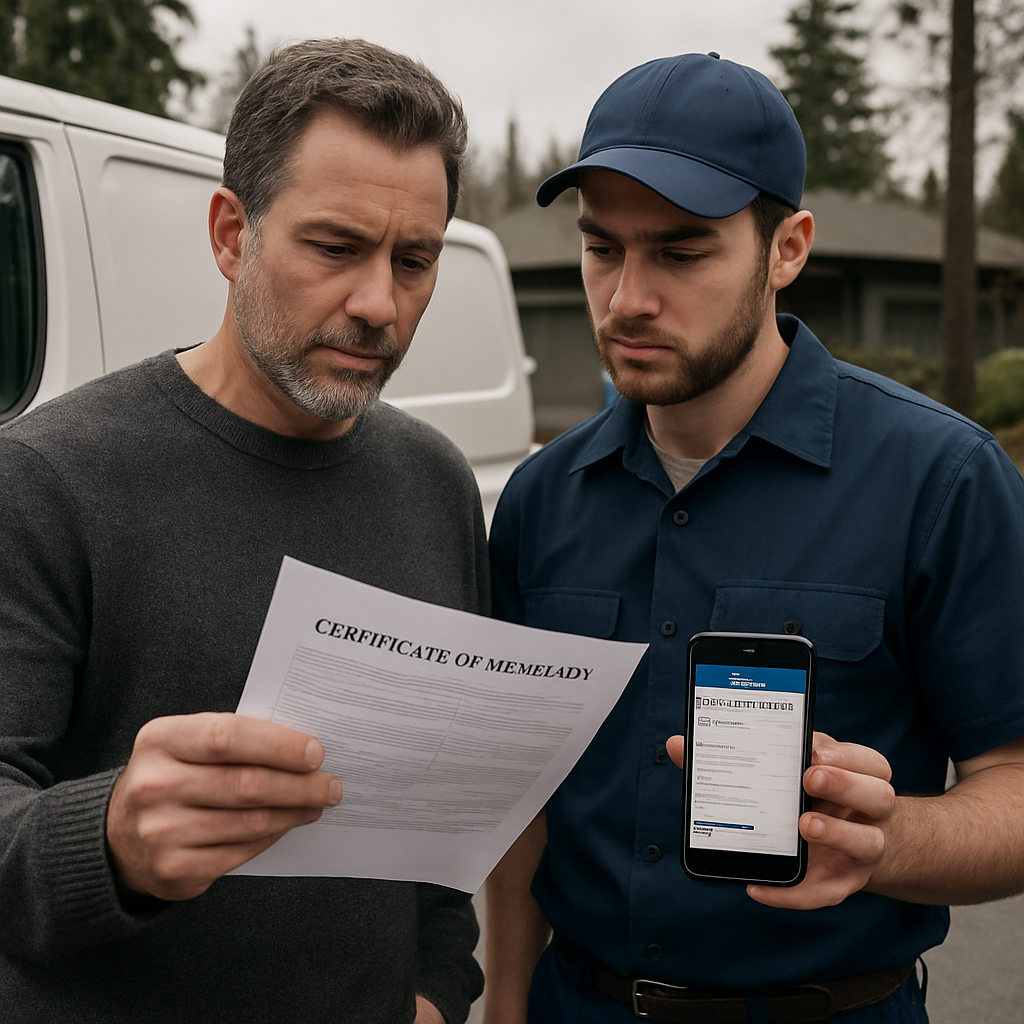
Immediate reality: don't assume a good-looking website or high star rating means the contractor is legally cleared to work in Oregon. For plumbers beaverton oregon residents hire, the two concrete checks are a current Oregon Construction Contractors Board license and a valid certificate of insurance in the contractor's name.
Quick verification steps
- Get the legal details up front: ask for the contractor's full business name and
CCBlicense number before scheduling. Handwritten or evasive answers are a red flag. - Verify the license: look up the number on the Oregon Construction Contractors Board. Confirm status is active, the business name matches, and scan for disciplinary actions or restrictions.
- Demand a Certificate of Insurance (COI): require general liability and workers compensation coverage shown on a COI. The insured name must match the CCB record or legal business entity.
- Confirm subcontractor coverage: if any work will be done by a subcontractor, get their insurance and license information too — you are liable for workmanship if they lack coverage.
- Cross-check permit history: verify the company has pulled similar permits on the City of Beaverton building and permits page to prove they actually do the kind of work you need.
Practical tradeoff: insisting on a COI and matching CCB record slows down hiring and can cost a little time in emergencies, but it prevents far larger headaches — claims that go unpaid or cancelled warranties when an uninsured worker is hurt or damages your home.
Concrete example: a renter in West Beaverton hired a cheap weekend caller who gave a license number that checked out but listed a different legal name. The COI named the subcontractor, not the business on the invoice. The mismatch complicated a later warranty claim and cost the renter extra legal time to resolve. Verifying both records up front would have prevented that.
Judgment you can act on: treat any mismatch between the CCB record, COI, and the invoice as a deal breaker unless the contractor supplies documentation linking the entities. In practice, reputable plumbing services Beaverton companies will email a COI and point to their CCB entry without resistance.
If a contractor refuses to provide a license number or insurance certificate, do not let them start work. It is not just paperwork — it protects you from liability and ensures the business is trackable if something goes wrong.
Pricing breakdown and what a fair Beaverton estimate looks like
Straight to the point: when you ask multiple plumbers beaverton oregon for a quote, a fair estimate is a document that separates diagnosis, labor, parts, permits, and cleanup — not a single lump sum with vague language. Get that separation before the crew arrives so you can compare apples to apples.
Key estimate components to expect: an honest estimate will identify the problem found at inspection, list the proposed fixes with material specifications or allowance, state whether labor is flat-rate or time-and-materials, disclose who pays permit and inspection fees, and specify warranty terms and a change-order policy. If any of those items are missing, you will pay for ambiguity later.
Tradeoff to judge: flat-rate pricing gives predictability for routine work (faucet repair, simple drain clearing), but it can hide exclusions. Time-and-materials is more accurate for unknowns (buried pipes, collapsed laterals), yet it requires clear hourly rates, parts markups, and a not-to-exceed cap. Choose based on how much unknown risk the job carries.
Concrete example: for a damaged sewer lateral, one contractor may propose trenchless repair with a written allowance for restoration, another may quote open excavation with explicit driveway replacement costs, and a third may give a low headline price that omits restoring landscaping. The first two let you see tradeoffs in disruption and scope; the third typically produces surprise invoices.
| Estimate line item | Why it matters | Red flag to watch for |
|---|---|---|
| Scope of work | Defines what the crew will actually do and what they will not touch | Vague phrases like repair as needed with no tasks listed |
| Materials and brands | Shows quality and replacement cost expectations | No material specs or generic parts listed |
| Labor basis | Tells you whether price is fixed or subject to hours | No hourly rate or no cap on time-and-materials jobs |
| Permits and inspections | Clarifies who pulls permits and pays fees | Estimate says may require permits with no responsibility stated |
| Warranty and follow-up | Protects you if the repair fails shortly after work | Warranty described as industry standard with no duration or written terms |
| Contingency / unknowns | Allows for unseen issues and shows how changes will be priced | No allowances or a refusal to provide a change-order process |
Practical judgment: cheapest headline price is rarely the best value. For Beaverton jobs that trigger permits or significant restoration, prefer a contractor who documents assumptions and accepts responsibility for pulling permits. Ask for photos of existing conditions and a written not-to-exceed figure for likely unknowns; those two tactics reduce invoice surprises and make post-job warranty claims enforceable.

How to read reviews and spot reliable patterns
Start with patterns, not star counts. A 4.8-star average tells you someone asks for reviews and gets praise; repeated themes inside those reviews tell you what the company actually does well or poorly. When searching for plumbers beaverton oregon, treat reviews as signals to confirm operational habits you care about: punctuality, pricing transparency, cleanup, and warranty follow-through.
What to trust in reviews and what to discount
Weight recent, specific, and verifiable details most heavily. Mentions of exact job types (drain cleaning Beaverton, water heater repair Beaverton), named technicians, photos, permit pulls, or returned calls are useful. Generic praise such as excellent service with no examples is weak evidence. Multiple similar complaints about the same issue are stronger red flags than a handful of one-off bad stars.
| Review excerpt | What that pattern usually means |
|---|---|
| Arrived late twice but fixed the leak | Unreliable scheduling; acceptable technical ability but expect timing issues |
| Included before/after photos and explained permit steps | Professional workflow and likely to pull required permits |
| Low price on call; invoice has extra charges | Bait-and-upcharge pattern — ask for written line-item estimates |
| Company responded publicly and offered to make it right | Shows accountability; responses reduce risk even if a complaint exists |
| Multiple reviews mention the same technician by name | Consistent crew — can be good for repeatability, but check for single-point failure if that tech leaves |
Practical limitation: online platforms can be gamed or biased by small samples. A lone glowing or scathing review means little; a cluster describing the same fault or strength over months is what moves the needle. For guidance on evaluating Google-specific signals, see Google review guidance.
Real-world case: A Beaverton homeowner found a plumber with many 5-star reviews but half mentioned unexpected parts charges. Before booking they called and asked how the tech documents unseen issues and whether there is a not-to-exceed cap. The company that provided a sample written invoice and a photo policy won the job; the other candidate could not explain billing practices clearly, so the homeowner passed.
- Quick checks to apply when reading any review: look for photos or serial details, check whether the reviewer mentions permits or code work (relevant for sewer line services Beaverton), note if refunds or callbacks were honored, and watch for repeated billing complaints.
- Platform-specific nuance: Nextdoor gives neighborhood context but small samples; Google aggregates volume and flags businesses that respond publicly; BBB shows formal complaint resolution history — use them together, not in isolation.

Next consideration: once reviews reveal a pattern you care about, verify it against licensing and a sample written estimate before scheduling work. Matching review signals to tangible proof prevents hiring based on reputation alone.
Beaverton specific tips and common local plumbing issues
Hard local constraints drive most surprises. In Beaverton you will repeatedly run into a small set of site realities — mature street trees, variable soils, and older residential plumbing — that change both what repairs are possible and how contractors price the work.
Why these local factors matter for your project
Practical consequence: tree roots and shifting soils increase the chance that a sewer lateral or buried pipe will need excavation or staged repairs rather than a tidy one-visit fix. That makes a visual camera inspection and a written allowance for restoration non-negotiable parts of any realistic estimate.
Tradeoff to weigh: trenchless methods reduce surface damage and usually speed up completion, but they are not a cure-all. Severe root matting, partial collapses, or poor access points frequently force open excavation. Expect honest contractors to explain why they recommend one approach over the other rather than sell you the flashier option.
Concrete example: a homeowner in a Beaverton neighborhood with large maples had recurring backups. The chosen contractor performed a pre-job camera inspection, which showed root encroachment and a soft spot in the pipe. The crew performed targeted excavation at the soft spot, repaired the pipe, and used selective trenchless relining for the remainder — the hybrid approach reduced restoration costs compared with full excavation and avoided an incomplete solution that would have led to repeat calls.
Scheduling and seasonal reality: plan non-urgent sewer or exterior plumbing work for the drier months. Saturated ground complicates trenching, increases labor time, and makes driveway or lawn restoration harder to control. For emergencies, confirm documented arrival windows and photographed condition reports up front; verbal promises about same-day service are unreliable under heavy rain or high local demand.
Operational questions that matter on the phone: ask for a camera report sample, who will coordinate utility locates and permits, a written restoration allowance, and how contaminated soil will be handled if encountered. Contractors who have repeat jobs in Beaverton will hand you these items without delay; those who push back are the ones more likely to deliver surprise invoices or poor cleanup.
Judgment for hiring: prefer plumbers beaverton oregon homeowners who show documentation (camera footage, permit numbers, photo records) and who explain tradeoffs between trenchless and open methods. That paperwork is the difference between an honest, repeatable repair and a low headline price that leaves you with future failures and restoration headaches. Next consideration: insist on the camera inspection before you accept any final price.
Recommended local plumbers and how River City Plumbing fits the market
Direct point: When you search for plumbers beaverton oregon you will see three practical provider types on the call list: nimble local independents, national franchises, and specialty contractors. Each category wins in different situations and understanding those boundaries saves time and money.
Where River City Plumbing sits and when to pick them
How River City Plumbing fits: River City Plumbing operates as a local Portland metro independent that emphasizes emergency plumbing Beaverton coverage, residential plumbing Beaverton work, and clear written estimates. For homeowners who want a single point of accountability, a local crew that will pull permits and provide follow up, River City is a realistic choice. See their services page and emergency plumbing page for published scope and response descriptions.
| Provider type | When to choose them | Practical tradeoff to consider |
|---|---|---|
| Local independent (example: River City Plumbing) | Residential remodels, clear warranty expectations, emergency plumbing Beaverton with local knowledge | Better communication and permit follow through, but capacity may be limited during peak storms |
| National franchises (Roto-Rooter, Mr. Rooter, Benjamin Franklin) | Large-scale sewer excavations or when 24/7 plumbing services Beaverton dispatch is the priority | Fast dispatch and heavy equipment; expect higher overhead and possible subcontracting |
| Specialty contractors (trenchless sewer, commercial plumbing contractors Beaverton) | Complex lateral repairs, hydro jetting services Beaverton, or commercial code work | High expertise for specific problems; more expensive for routine fixes |
Practical insight: Local independents frequently give more granular estimates and will accept responsibility for pulling city permits and coordinating inspections. Franchises excel at immediate scale and heavy equipment but sometimes treat smaller jobs as low margin, which shows up in inconsistent follow up on warranty items.
Concrete example: A Beaverton homeowner had a late evening burst pipe. A local company performed a temporary clamp and water shutoff, then scheduled a daylight full repair with a permit. The temporary fix limited damage overnight and the follow up included a written scope for pipe repair and patching. That split response is common: emergency triage first, permanent repair with permits second.
Judgment you can act on: For routine jobs like faucet repair Beaverton or drain cleaning Beaverton pick a contractor that demonstrates the exact parts and warranty in writing. For jobs with high unknowns such as sewer line services Beaverton or trenchless sewer repair, prioritize firms that show inspection footage, provide a restoration allowance, and explain contingency pricing up front.
Next consideration: Decide first whether you need immediate triage or a permited permanent fix, then choose a provider category. If you are unsure, call a local independent like River City Plumbing to describe the problem and ask whether they will perform an initial stopgap and then handle the permit and final repair, or refer you to a specialty contractor for complex sewer or commercial work.
Getting the most value from your service call and protecting yourself
Start by setting the rules before a technician shows up. Tell the dispatcher you want: a firm arrival window, the techs full name, and a written scope for any work they plan to do beyond triage. That short bit of friction eliminates a lot of common overcharges and miscommunication.
Practical steps to get value and avoid surprises
Get documentation first. Ask for a written estimate or temporary-scope email before the crew starts work, even for emergency calls. For non emergency jobs, require the written estimate to list parts, labor basis (flat rate or hourly), and who pays permit fees.
- Demand photo proof: require before and after photos or video for any hidden work (inside walls, under slab, sewer camera footage). This prevents disputes about what was done later.
- Set a not-to-exceed cap: if the job has unknowns, get a written not-to-exceed amount or an approval threshold for additional work so you do not get surprised by a big add-on mid-job.
- Keep payment traceable: pay by card or check, not cash. A traceable payment supports warranty claims and formal complaints if needed.
- Limit deposits: for non emergency projects, decline deposits larger than 30 to 50 percent. For emergency triage, a reasonable smaller down payment is acceptable but document the temporary nature and follow-up plan.
- Confirm permit responsibility: ask whether the contractor will pull required permits and provide permit numbers. If they will not, do not proceed with work that normally triggers a city inspection.
- Get warranty terms in writing: a verbal promise is worthless. Ensure duration and what is covered are written on the invoice or estimate.
Tradeoff to consider. Insisting on a not-to-exceed and detailed documentation sometimes increases the initial estimate because contractors price the risk into bids. That is an acceptable cost when the alternative is open-ended invoices and surprise restoration charges.
Concrete example: A Beaverton landlord called a plumbing company for persistent slow drains in two units. They required a CCTV report and a 90 day clear-drain warranty before authorizing work. The contractor provided video showing a common blockage and used a scoped hydro jet with a written follow-up plan. The landlord avoided repeated callbacks and did not pay for unnecessary camera passes later.
A practical limitation: in true emergencies you may need to accept limited triage first. Do not accept permanent repairs without paperwork. For emergency plumbing Beaverton calls insist the company issue a same-day written temporary-scope and a scheduled date for the permanent repair and permit pulls.
Where to get help if things go wrong. Keep the invoice, photos, permit numbers, and the contractor CCB license. Use the City of Beaverton building and permits site to confirm inspections and the Oregon Construction Contractors Board to check license or file a complaint. For a local company that publishes scope and emergency policies, see River City Plumbing services page.
Next step: before you book the call, decide whether you need temporary triage or a permited permanent repair and tell the dispatcher—this single instruction changes how contractors bid and protects you from costly mid-job scope creep.