
Plumbing Emergency Repair: How Portland Pros Diagnose and Fix Urgent Leaks Fast
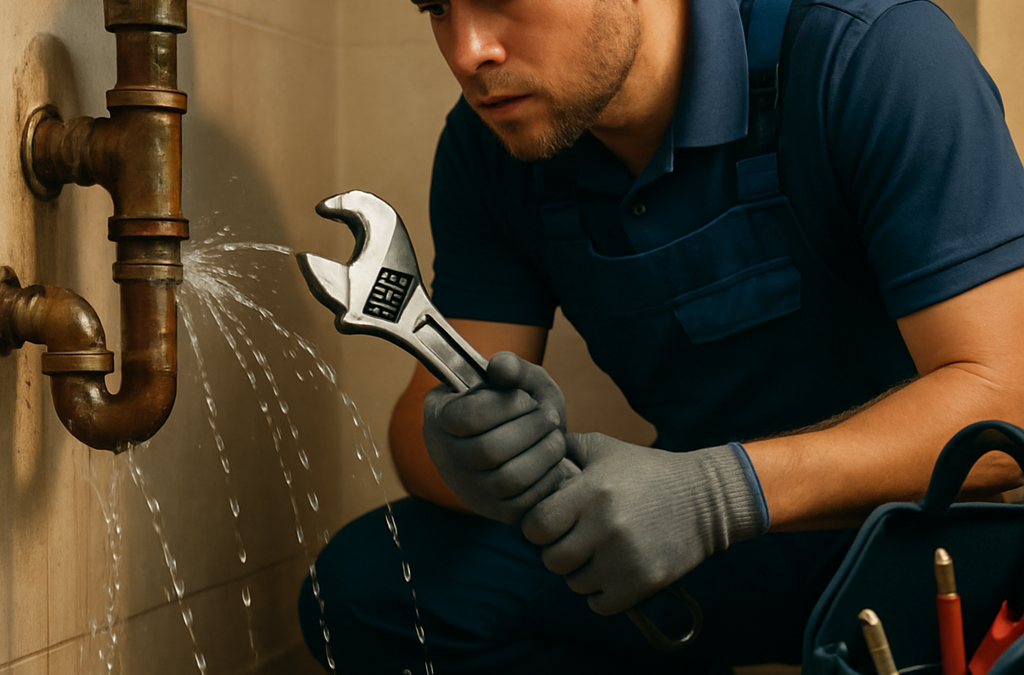
When a hidden pipe starts dumping water into your home, you need plumbing emergency repair that stops damage fast and avoids costly repeat work. Portland pros use a predictable sequence – triage and isolation, thermal and acoustic detection, temporary stabilization, then a scoped permanent fix – to find leaks quickly and get water under control. This guide explains what technicians will do when they arrive, the tools they use, realistic response times and costs, and the steps you should take before help gets there.
How Portland Pros Triage an Emergency Leak
First priorities are safety and containment. A professional crew arriving to a plumbing emergency repair focuses on stopping active water, removing electrical hazards, and preventing further structural or mold damage — not on long-term fixes on the first visit.
Ordered triage steps technicians perform
- Remote intake: Dispatcher screens for hazards (electrical, gas, basement flooding) so the first crew arrives prepared.
- Safety sweep: On site the tech checks for energized circuits, gas smells, and unstable ceilings before touching valves.
- Targeted isolation: Techs close the smallest number of valves needed to stop the leak — often a branch or zone valve rather than the main to preserve critical systems.
- Confirm and measure: Crews use pressure gauges, moisture meters, and quick camera passes to confirm the leak path and quantify active flow.
- Temporary stabilization: Apply a clamp, SharkBite emergency coupling, or controlled drain to stop flow and protect finishes while planning a permanent repair.
- Dewatering and protection: Use wet vacs, submersible pumps, and tarps; move valuables and set up containment to limit water damage spread.
- Documentation and next steps: Photograph conditions, record meter readings, and provide a written initial assessment with recommended timelines and costs.
Practical trade-off: Choosing to isolate a branch valve instead of the main keeps hot water to a boiler or fire system but risks pressurizing nearby lines; technicians weigh continuity of service against potential for unseen secondary leaks and err on the side of lowering pressure when uncertain.
Limitation to know: Tools like thermal cameras and acoustic correlators speed locating hidden leaks, but they are not foolproof — thermal requires a temperature differential and correlators struggle on noisy, multi-tenant systems. Expect technicians to combine methods rather than rely on one signal.
Concrete example: A River City Plumbing crew called from NE Portland arrived during a weekend evening call. They isolated the affected zone within 25 minutes, confirmed a slab line leak with an acoustic detector, installed a temporary clamp and pumped out the intrusion, then scheduled trench and permanent pipe replacement for the next business day to meet permitting requirements. This kept drywall replacement minimal and allowed insurance documentation to be completed immediately.
Quick judgment most homeowners miss: Holding off on calling a 24-hour plumber to try ad hoc fixes usually increases overall cost. Temporary DIY patches can hide active leaks from insurance adjusters and create mold pockets; a licensed crew that documents emergency actions protects both the home and the claim.
Next consideration: After initial triage expect a short written plan: what was stopped, what temporary measures were installed, and the recommended timeline for permanent repair and any permits. That plan is what separates a competent emergency response from a short-term bandage.
Tools and Technologies Used to Find Hidden Leaks
Key point: A well equipped crew does not guess where water is coming from. They use layered detection methods that reduce destructive cutting and speed an accurate repair plan.
Noninvasive thermal and moisture scanning
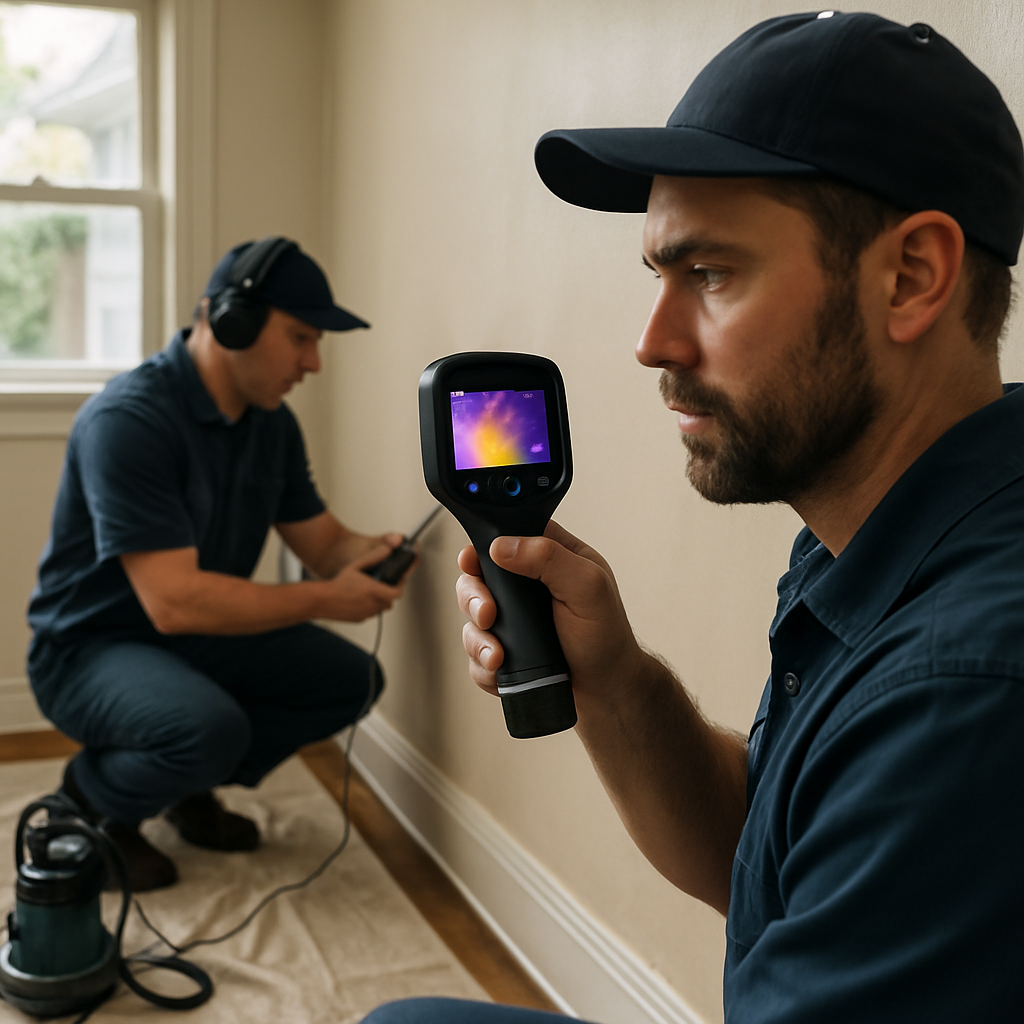
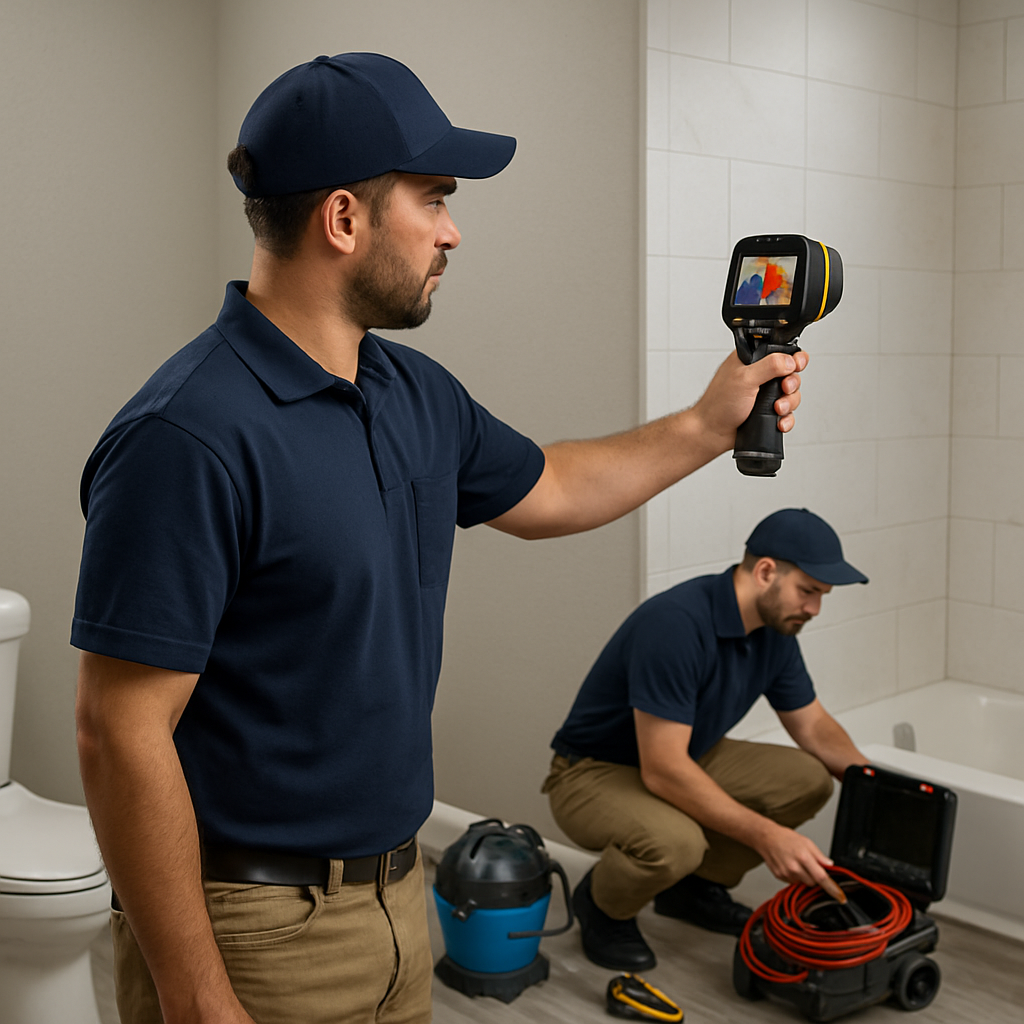
Thermal imaging and moisture meters: Technicians use FLIR thermal cameras to reveal cold or wet bands in walls, ceilings, and floors without opening them. Thermal cameras require a temperature differential to be reliable, so techs pair them with pinless and pin moisture meters to confirm elevated moisture readings before committing to a cut.
Acoustic location and correlators
Acoustic equipment: Correlators and handheld acoustic listeners pick up the sound of pressurized water escaping metal and plastic lines. They work best on single supply lines with steady pressure and struggle in noisy, multiunit stacks or open HVAC equipment rooms. Expect crews to place sensors at two access points and triangulate the sound rather than relying on a single reading.
Video inspection and pipe tracing
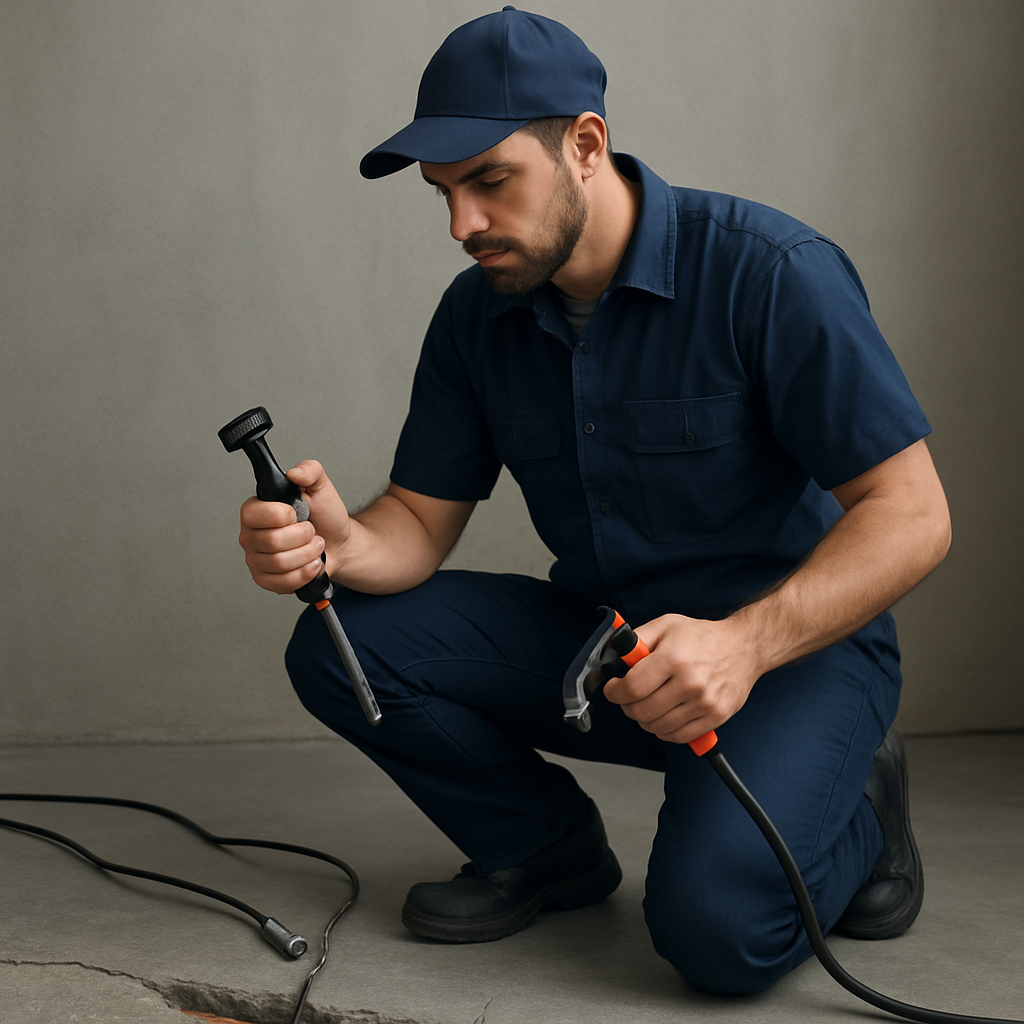
Video cameras and locators: A RIDGID SeeSnake or equivalent is standard for drain and sewer inspections; the camera both locates damage and documents whether roots, debris, or a failed joint caused backup. Electronic pipe locators and tracer wires are used to follow buried lines or to verify the path of a slab run before cutting concrete.
- Common kit: FLIR thermal camera, pinless moisture meter, acoustic correlator, RIDGID SeeSnake CCTV, electronic pipe locator, pressure gauges, portable pump and wet vac.
- Why multiple tools: One tool reduces time only in ideal conditions. Combining thermal, acoustic, and camera inspection converts probability into actionable certainty.
Concrete example: On a mid century bungalow in Southeast Portland a crew scanned an upstairs bathroom with a thermal camera and found a narrow cool strip behind the vanity. They confirmed moisture with a pinless meter, then ran a SeeSnake through the sink trap to rule out a drain clog. The result: a targeted cabinet removal and short section replacement rather than a full wall demolition.
Practical tradeoff: Noninvasive detection saves finishes but can lengthen time on site if signals are ambiguous. At some point a small exploratory cut delivers faster, cheaper diagnosis than prolonged scanning. Experienced techs choose that point based on signal confidence and the consequences of delaying repair.
Detection tools are aids, not replacements for access. If technicians cannot verify a leak without exposing structure they will prefer a small, controlled opening over uncertain diagnostics.
Next consideration: Clear access to the affected area and have utility and meter photos ready when you call emergency plumbing repair. That small preparation shaves time from diagnostics and reduces the chance technicians must return with different gear.
Common Portland Emergency Leak Types and How Pros Approach Each
Not all leaks are the same. A burst supply line, a slab leak, a failing water heater, and a runaway toilet each demand a different immediate move, detection strategy, and long-term fix — and getting those choices wrong increases repair costs and downtime.
How pros prioritize by leak type
Key approach: Stop the worst harm first, then use targeted diagnostics. For visible supply-line failures the priority is physical isolation and flow control; for hidden slab or sewer problems the priority is accurate location before any slab cutting or excavation.
| Leak type | Immediate pro action | Typical permanent solution |
|---|---|---|
| Burst supply line (PEX, copper) | Isolate branch, apply emergency clamp or push-fit coupler to stop flow, relieve pressure | Replace affected section with PEX or copper splice; consider partial repipe if corrosion or multiple failures |
| Slab leak under foundation | Perform acoustic location and pressure testing, minimize access points, dewater impacted voids | Targeted slab cut and pipe replacement or trenchless liner where soil and access allow |
| Water heater tank leak or valve failure | Shut off water and power/gas, drain tank to prevent uncontrolled discharge | Replace failed tank or convert to tankless; replace corroded fittings and install permited replacement |
| Fixture, toilet, or supply connection leak | Isolate fixture valve and dry the area to protect finishes | Replace valves, supply flex lines, wax ring, or reseat fittings; confirm no hidden damp framing |
Practical trade-off: Emergency clamps and SharkBite couplers are fast and legitimate for stabilization, but they are not always code-compliant as a permanent repair. Expect a licensed plumber to recommend a permanent splice or repipe when corrosion, joint fatigue, or incompatible materials are present.
Limitation to accept: Acoustic correlators and thermal scans speed location but fail when there is ambient noise, insulated walls, or multiple parallel lines. In those cases a small exploratory cut or a camera run often saves time and money versus chasing ambiguous signals.
Concrete example: A River City Plumbing crew in Northwest Portland found reduced water pressure and a damp garage slab. Acoustic testing identified a 6 foot run under the slab; the team installed a temporary clamp on the accessible branch to stop immediate flow, then returned the next day for a minimal slab cut and section replacement. The approach avoided a full slab replacement and kept restoration costs lower while meeting permitting requirements.
Judgment most homeowners miss: Minor-looking leaks at fixtures often indicate upstream wear. Fixing the visible symptom without inspecting feeder lines invites a repeat emergency. Professionals treat fixture failures as potential indicators, not isolated events.
Next consideration: When you call for plumbing emergency repair, describe what you see and any noise or pressure loss. That lets the dispatched crew decide whether they will stabilize and return with a scheduled permanent repair or attempt same-day replacement — a choice driven by access, safety, and permitting constraints.
Step-by-Step Emergency Repair Workflows
Straight to the point: in a plumbing emergency repair the crew follows a compact sequence: stop active loss, assess access and hazards, choose a stabilization tactic that preserves evidence, then execute either a same-day permanent fix or staged repair with documentation. This section lays out realistic, actionable workflows technicians actually use in Portland — including the trade-offs that determine whether work finishes the same day or is intentionally staged.
Immediate stabilization workflow
First moves (minutes): techs confirm the source, isolate the smallest system needed to stop flow, and remove standing water. Containment is practical: tarps, basins, and portable pumps keep water off finishes while evidence (meter readings, photos) is captured for insurance.
Short-term fixes (15–60 minutes): crews fit a push-fit coupling, a rubber pipe clamp, or reroute flow with a temporary bypass. These solutions are explicitly labeled temporary in the written report — they stop damage but rarely meet permit or longevity criteria.
Converting temporary fixes to permanent repairs
Decision factors: technicians weigh four items before committing to a same-day permanent repair: access difficulty, permit triggers, parts on hand, and structural drying needs. If permitting or structural trades are required, staging the permanent work is usually the correct choice.
Typical staged sequence: (1) stabilize and document, (2) schedule slab cut or water heater swap with permit, (3) perform permanent pipe replacement or unit installation, (4) test and file required inspections. Staging adds a day or two but reduces total disruption and legal risk in Portland.
Slab and buried-line workflow (practical path)
Approach that limits restoration: crews start with nondestructive location methods, then make a single controlled access point rather than broad excavation when possible. If trenchless lining is feasible, it is chosen to avoid long-term restoration costs — but soil conditions and permit rules often force a small, strategic slab cut instead.
Trade-off to expect: trenchless saves finish work but can be more expensive up-front and may not be permitted for supply lines. A minimal slab cut is low-tech, predictable, and typically faster when soil or pipe orientation is uncertain.
Water heater and fixture emergency workflow
Hot water failures: crews isolate water and power/gas, drain the tank to a safe level, and install a temporary bypass if occupants need hot water. Replacement is often the sensible permanent route when tanks show corrosion or multiple failures — and Portland permits usually apply for tank swaps.
Fixture-focused emergencies: for a catastrophic toilet or sink leak, techs isolate the branch, remove saturated materials only as needed, and test upstream lines to rule out hidden feeder failures before signing off.
Concrete example: A River City Plumbing crew responding to a midnight call in NE Portland found a laundry branch leaking into a finished closet. They isolated the branch, installed a push-fit repair to stop flow, set up a dehumidifier and documented the condition with photos. With soil access limited, the permanent PEX splice and permit work happened the next morning, avoiding a larger drywall replacement and keeping total downtime under 36 hours.
Practical judgment: same-day permanent repairs look good but are not always the cheapest or safest choice. When permits, inspections, or structural trades are involved, a planned follow-up avoids code violations and rework. If you need fast help now, call a licensed 24-hour plumber and provide photos of the problem area — it shortens diagnostics and speeds a correct workflow.

Portland Safety, Code, and Permitting Considerations
Straight fact: whether a plumbing emergency repair finishes the same day in Portland is often decided by permit and inspection requirements, not by the technician's speed. Safety checks and municipal rules commonly force a staged approach even when the leak is obvious.
What typically triggers a permit: water heater replacements, major repiping, any slab penetration, sewer line repairs, and installation or replacement of backflow prevention devices. Each of these touches systems that affect public health, structural safety, or shared services, so the Bureau of Development Services or the Water Bureau will expect paperwork and inspection clearance.
- Water heater swap: gas or electrical shutoff, gas piping or venting changes require permits and a licensed contractor to file inspections.
- Slab work or trenching: cutting concrete or excavating near foundations commonly triggers structural and plumbing signoffs.
- Major repipe: replacing whole branch or house supply lines is not a clipboard job; it requires plans, permits, and a final inspection.
- Sewer and public line work: repairs that tie into a public main or affect sewer flow usually involve the city and sometimes public works oversight.
- Backflow devices and cross-connection control: multiunit or commercial properties need certified devices and proof of testing.
Practical trade-off: doing a full permanent repair on an emergency call can look efficient, but if it bypasses permit steps you risk insurance pushback, red-tagging, or having to open new work for inspection. In many cases the safer, lower-cost path is a documented temporary stabilization followed by a permitted replacement the next business day.
Licensed contractors and inspections – what matters in practice
Key point for property owners: hire a contractor registered with the Oregon Construction Contractors Board and experienced with Portland inspections. Licensed crews understand which emergency fixes can be made immediately and which require permits, and they submit permit applications faster than unlicensed operators. For local guidance see City of Portland Water Bureau and bring a contractor who will handle filings for you.
Concrete example: A Portland home had a leaking water heater that was spraying into a utility closet. The responding crew isolated the unit, shut gas and water, and drained the tank to prevent further discharge. They could not install a new unit that night because a gas-line permit and inspection were required, so the crew performed a safe temporary cap and filed the permit first thing the next morning; the licensed replacement and inspector signoff were completed that afternoon.
Limitation to accept: inspectors in Portland are pragmatic but they will not accept undocumented permanent work after the fact if the installation changes safety or utility connections. Retroactive permits exist, but they add time and cost and can require undoing work to allow inspection access.
Do this immediately after emergency stabilization: photograph the scene with timestamps, obtain the responding technicians license numbers, ask the contractor how they will handle permits, and keep all receipts. This preserves insurance credibility and speeds inspection scheduling.
What to Expect When River City Plumbing Responds to an Emergency
Immediate posture: When River City Plumbing dispatches to an urgent call the crew arrives prepared to reduce damage first and fix root causes second. Expect technicians who will ask targeted questions over the phone so they show up with appropriate detection gear, temporary fittings, and pumps rather than a generic toolbox.
On the phone and on arrival
- Phone triage: what dispatch will ask – affected fixtures, visible water, photos of the area, whether power or gas is involved, and your nearest cross streets so routing is fast.
- Crew size and kit: most emergency jobs get a two-person crew with a FLIR thermal camera, an acoustic listener, a RIDGID-style camera or locator, a portable pump/wet vac, and emergency couplers or clamps.
- First checks on site: technicians will verify hazards at the panel, confirm the leak path visually, and isolate the smallest section that stops flow while keeping essential systems running where safe.
Practical limitation: crews rely on homeowner access. Locked basements, gated yards, or unavailable keys routinely delay diagnostics and force temporary measures that extend total downtime. If you cannot be on site, name an agent who can authorize shutoffs and permit filings to avoid unnecessary staging.
What they deliver that matters: expect a short written initial assessment that lists exactly which valve was closed, a set of diagnostic photos, a clear label on any temporary repair, and a recommended timeline for permanent work including permit needs. That packet is what your insurer and building department will want.
Pricing and scheduling transparency: River City provides an emergency service fee plus either an itemized stabilization charge or a same-day repair quote. Be prepared to choose between paying overtime for a same-day permanent repair or accepting a documented temporary fix with a scheduled, permitted replacement — each choice has cost and compliance trade-offs.
Concrete example: A crew dispatched to Sellwood-Moreland responded to a soaking utility closet. They arrived with cameras and clamps, isolated the branch and stopped flow, photographed the scene, fitted a labeled push-fit for containment, then filed the permit the following morning and completed the permanent PEX splice that afternoon. The homeowner avoided an unnecessary full-wall demo because the crew documented the condition and targeted the repair.
Judgment most homeowners overlook: speed is valuable, but documentation is more valuable. A fast permanent-looking fix without written records or permit handling often creates bigger headaches with insurers and city inspectors than a properly recorded temporary stabilization followed by a permitted replacement.
If you need immediate help: insist on a written record of what was stopped and which temporary materials were used. That single document preserves your insurance claim and keeps the permanent repair straightforward.