

How to Choose the Best Portland Plumbing Repair Service: A Homeowner’s Checklist
When you need portland plumbing repair, a rushed call or a single five-star review can cost you time, money, and headaches. This checklist walks Portland homeowners through verifying licenses and insurance, comparing written estimates, evaluating emergency response, and spotting red flags so you can hire with confidence. Short, practical steps and sample questions will help you get clear timelines, proper permits, and a warranty that actually protects your home.
Verify contractor credentials and licensing
Licensing is the single most important check when hiring for portland plumbing repair. Use the Oregon Construction Contractors Board to confirm a contractor is legally registered and that the license name matches the business advertising the service. See Oregon Construction Contractors Board license search for the official lookup.
Verify license and insurance online before you call
Search the CCB by business name or license number and note expiration, disciplinary actions, and the specific classification. Cross check the business address and phone number against their website and Google Business profile. For jobs that may need a permit, confirm the contractor has a record of pulling permits with the City of Portland via Portland Bureau of Development Services.
- On the phone or at arrival: Ask for the contractor CCB license number and write it down
- Insurance proof: Request a Certificate of Insurance showing general liability limits and workers compensation or an exemption, and note the insurance carrier name
- Business identity: Confirm the company name on the license matches the vehicle, invoice, and Google Business listing
- Permit responsibility: Ask if the contractor will pull permits and provide permit references or recent permit numbers
- Written estimate: Obtain a short written scope with approximate timeline before any work begins
Tradeoff to accept: Licensed contractors typically charge more, but they reduce homeowner risk by pulling permits, following code, and carrying insurance that protects the homeowner from liability. Hiring an unlicensed worker can save money up front and create exposure for code violations, insurance denials, and resale problems.
Concrete example: A homeowner with a failing water heater hired a lower cost, unlicensed technician to replace the unit. The City flagged the installation during a later inspection, required a permit and corrective work, and the homeowner paid for reinstallation and a permit fine that exceeded the initial savings. Verifying license and permit practices would have avoided that outcome.
Three short scripts to use on a call
- License check script: Please give me your CCB license number so I can confirm your registration on the Oregon CCB site and match it to your business name
- Insurance verification script: Can you email a Certificate of Insurance showing general liability limits and the insurance carrier name before you arrive? I will confirm coverage with the carrier if needed
- Permit and scope script: For this job who pulls permits and who will sign off at final inspection with Portland BDS? Please include that in the written estimate
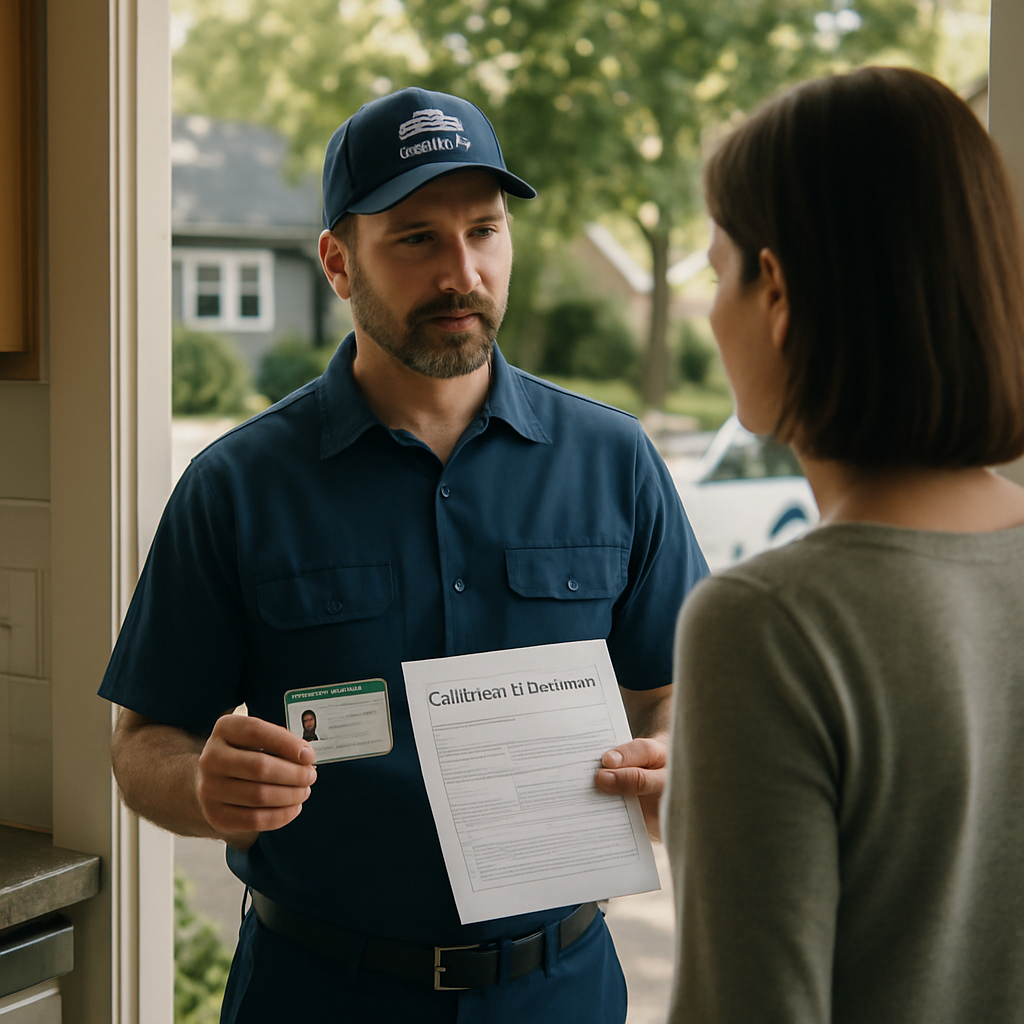
If a company hesitates to provide a license number or a COI, treat that as a firm red flag. If you want a local reference to how a proper verification looks in practice, review River City Plumbing service and emergency pages and note how they publish licensing, service areas, and permit statements on their site: River City Plumbing services.
Confirm permits, code compliance, and who pulls permits
Permits are the enforcement mechanism that forces work to meet local code; if you skip them you own the risk. Unpermitted plumbing can block insurance claims, create problems at resale, and force expensive corrective work when a city inspector discovers the issue. Expect permits to add days to a project for application and inspection windows — that is the tradeoff for proper, defensible work.
Which Portland jobs commonly need a permit
| Work type | Typical permit requirement in Portland | Why it matters |
|---|---|---|
| Main water line repair or replacement | Permit almost always required | Public water connection and meter changes require inspector sign-off |
| Sewer line repair or trenchless sewer work | Permit and sometimes separate sewer connection approval | Protects downstream systems and confirms proper backfill and test |
| Gas line installations or changes | Permit and licensed gas fitter required | Safety-critical; inspectors verify pressure testing and materials |
| Repiping or major drain reconfiguration | Permit depending on scope | Ensures venting, trap placement, and fixture locations meet code |
| Water heater replacement (if fuel type or location changes) | Often requires permit | Confirms venting, combustion clearances, and seismic strapping where applicable |
| Backflow prevention device installation | Permit and registration commonly required | Protects public water supply; documentation must be filed |
Practical step: before you sign, get a short written commitment that names who will file the permit application, the expected permit number or submission date, and the inspector sign-off timeline. Then verify the permit on the City of Portland portal at Portland BDS. This avoids the common dodge where a contractor says they will handle permits but never follows through.
- Check filing ownership: Ask whether the company or you (the homeowner) will be listed as the permit applicant and why that matters for liability and future access to records.
- Request the permit card on site: For any work requiring inspection, insist the crew posts the permit card where the inspector can see it; photograph it with date/time stamp.
- Confirm final inspection: Get the name of the expected inspector or the BDS final inspection number and set a date to verify completion online.
Concrete example: A Portland homeowner arranged emergency slab leak spot repairs. The contractor fixed visible damage but did not submit any paperwork. Months later the homeowner applied to refinance and the mortgage underwriter flagged unpermitted plumbing changes; the lender required an engineer assessment and retroactive permits that cost far more than doing it properly the first time.
Judgment you should act on: For emergency repairs, accept temporary fixes only if the contractor documents a committed timeline to submit a retroactive permit and complete required inspections within a fixed number of days. If a contractor resists committing in writing, do not proceed — short-term savings are rarely worth long-term exposure.
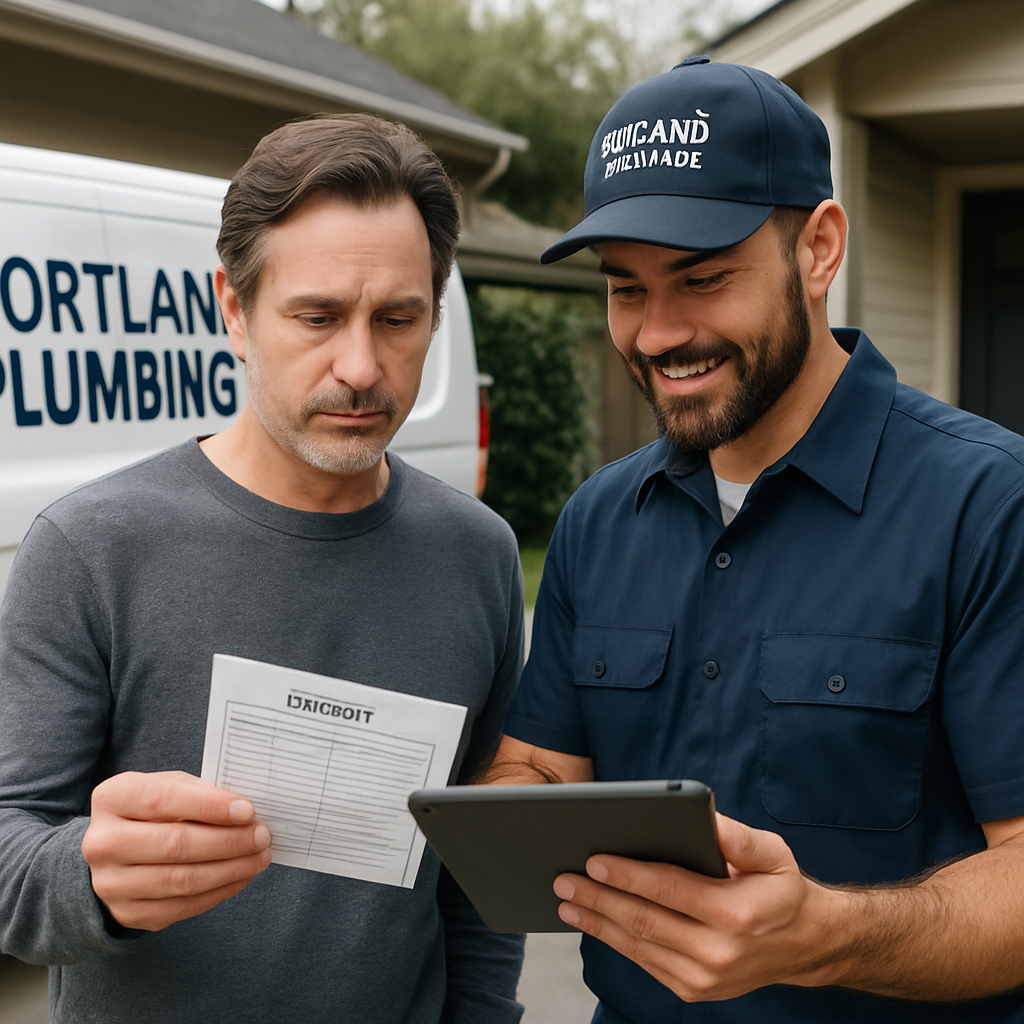
Evaluate experience, specialization, and local knowledge with River City Plumbing as an example
Not every plumber is right for every job. For common tasks like faucet repair or toilet repair Portland, a general residential technician is fine. For recurring clogs, sewer line problems, slab leaks, or gas work you need a crew with specific tools, certifications, and a track record in those exact repairs.
Specialization matters because diagnostic failures are the expensive ones. A rooter that bails on a recurring clog without camera inspection only defers cost; a contractor with camera inspection, hydro jetting services Portland, or trenchless sewer repair Portland capability will find the root cause and fix it correctly. Expect to pay more for that capability, but expect fewer callbacks.
How to match the job to company skills
- For blocked drains or recurring backups: look for camera inspection and hydro jetting in the service description rather than only mechanical snaking
- For sewer line failure or lateral replacement: prioritize contractors who list trenchless sewer repair Portland or main water line repair in Portland OR and who can show before/after job photos
- For slab leak or hidden leaks: confirm they use slab leak detection in Portland equipment and can provide a scoped diagnostic report
- For water heaters: check for water heater repair Portland and proper venting/seismic work experience
- For gas line or appliance moves: insist on licensed gas fitters and permits
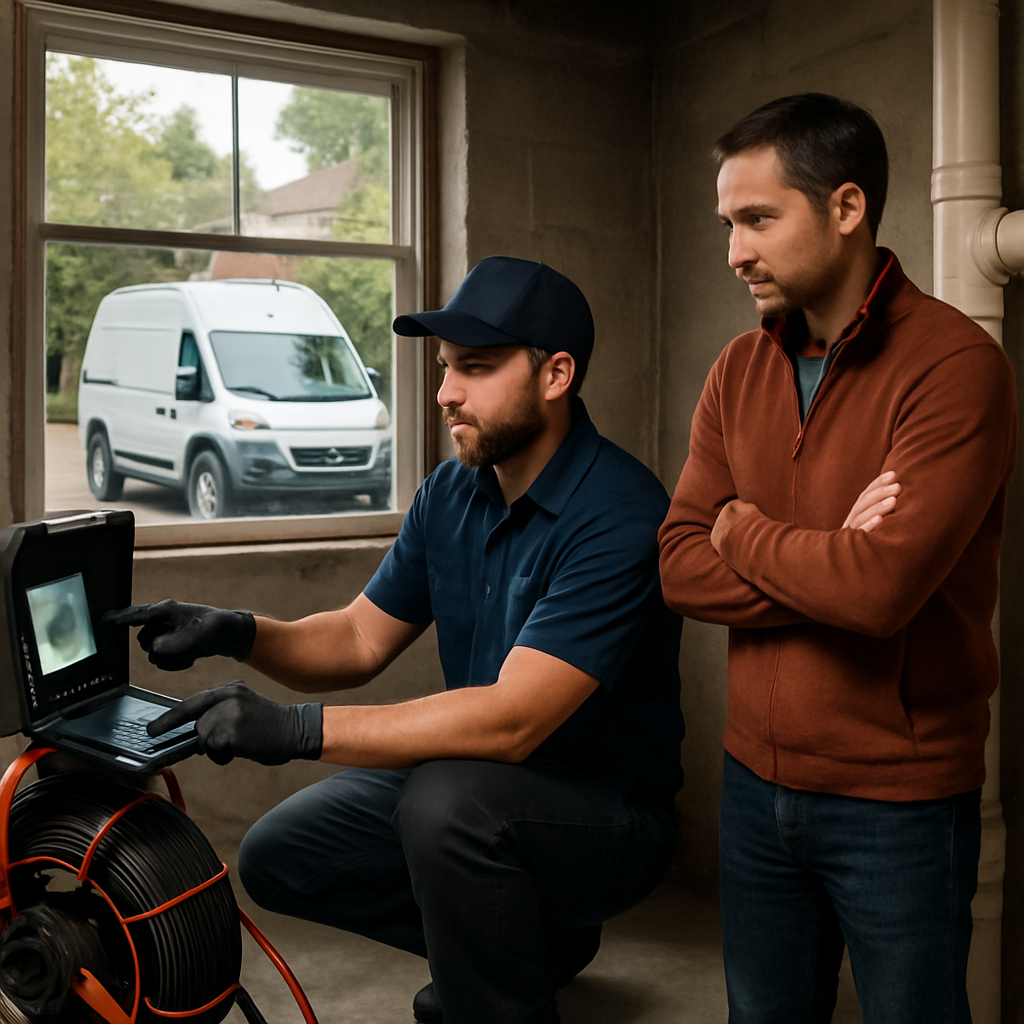
Concrete example: A Portland homeowner kept getting the same basement backup after pay-per-job snake attempts. A contractor that offered camera inspection and trenchless options located a damaged lateral and completed a trenchless repair, avoiding repeated service calls and a disruptive full excavation. River City Plumbing lists camera inspection, drain cleaning Portland, and trenchless sewer repair on their services pages as the sort of capability you should verify before hiring: River City Plumbing services.
Local knowledge is a separate and often under-appreciated advantage. Portland neighborhoods vary — older inner east homes often have clay laterals, while westside homes face different soil and tree root patterns. A crew that routinely works in your neighborhood knows likely failure modes, typical permit requirements, and which fixes are durable versus quick patches.
A practical tradeoff: specialized teams can have longer lead times and higher minimums, and they may prioritize larger, permit-heavy jobs over a small faucet repair. If the job is small and urgent, a local generalist who is licensed and insured may be the faster, cheaper option — just check they will not cut corners on diagnosis or permits.
Key point: match the company capabilities to the specific failure mode and ask for the diagnostic method (camera, leak detector, pressure test) they will use before work starts.
Assess reputation: reviews, references, and proof of past work
Start with pattern recognition, not star counts. A handful of perfect ratings mean little; consistent details across multiple reviews reveal how a company actually behaves on jobs for portland plumbing repair. Look for repeated mentions of punctual arrival, follow-through on permits, cleanup habits, and whether callbacks were handled without extra billing.
What to spot in reviews: positive notes about clear estimates, photos of before/after work, and repeated references to the same technician are good signals. Negative reviews that focus on scope creep or surprise charges are especially informative because they point to predictable business practice, not a one-off mistake.
How to verify references and past work quickly
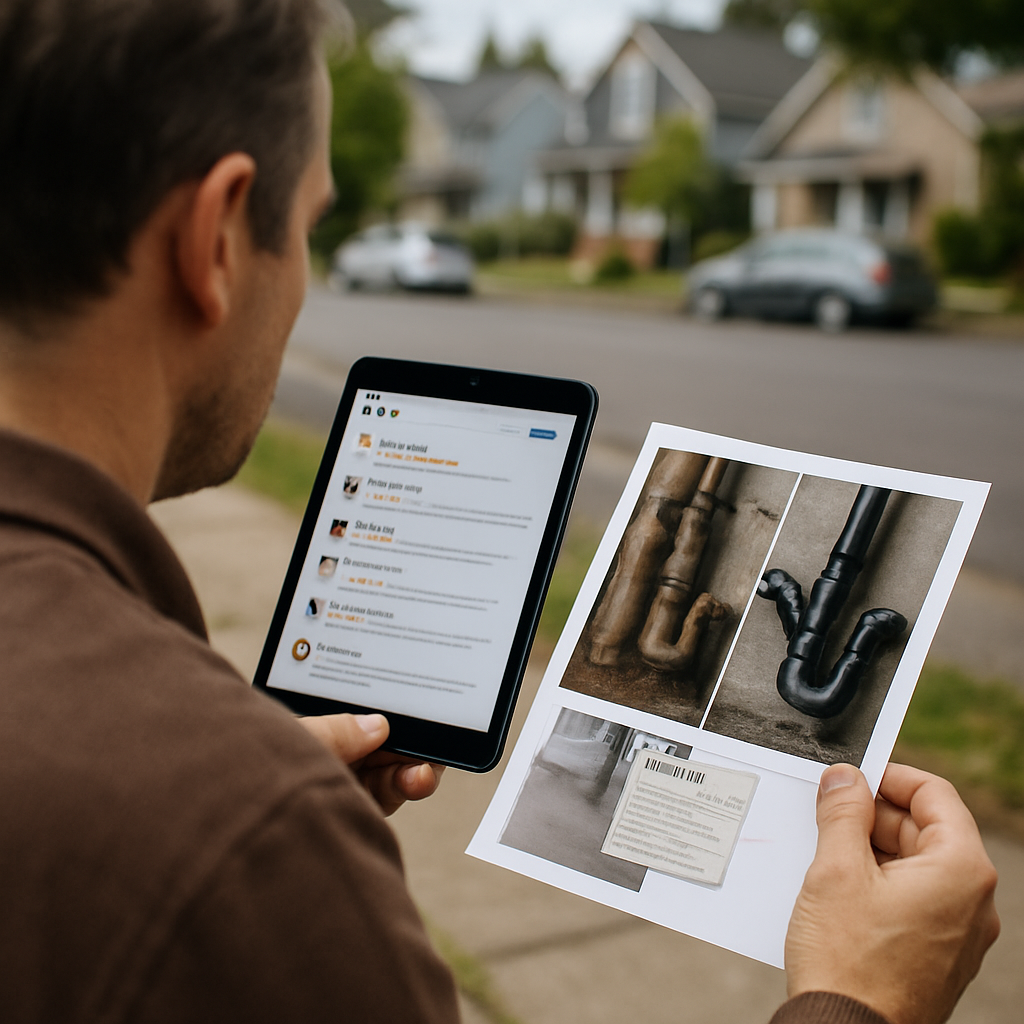
Request verifiable proof, not vague claims. Ask for recent job photos that include visible permit cards or permit numbers, and ask for two references who had the exact service you need — for example drain cleaning Portland or water heater repair Portland. Then cross-check any provided permit numbers with the City of Portland portal at Portland BDS.
| Platform | What the platform shows | Practical signal to trust or distrust |
|---|---|---|
| Google Business | Recent jobs, quick photo uploads, owner responses | Trust if multiple dated photos plus owner replies to complaints |
| Yelp | Long-form customer stories and detail on communication | Trust if reviews include specifics like permit numbers or model numbers |
| Better Business Bureau | Complaint history and company responses | Trust if complaints are few and the company provides documented remedies |
Practical tradeoff: extensive portfolios and before/after galleries are excellent evidence, but companies that invest in those materials often price higher. If you need affordable plumbing repair Portland for a small urgent job, weigh the value of documented experience against the immediacy and cost — and require a clear written scope regardless of price.
- Three quick questions to ask a reference: How accurate was the original estimate compared with final cost, did the crew arrive within the promised window, and was any post-job clean up or follow-up required?
- What to listen for on the call: named employees, permit references, and specific timelines — vague praise without details is not helpful
- When to press harder: if the reference hesitates or gives only generalities, ask for a photo or permit number; that lack of evidence is often a red flag
Concrete example: A Portland homeowner posted a complaint after repeated basement backups; review threads showed the company sent the same technician three times without camera inspection. The homeowner then hired a crew listing camera inspection and trenchless sewer repair and solved the issue in one job. Reviews that mention diagnostic methods reveal whether the company fixes symptoms or root causes.
Check how companies handle negative reviews. A fast, factual response and an offer to make things right is a stronger signal than a spotless review history with no interaction.
Next consideration: after you confirm reputation and proof of past work, move directly to written estimates and permit responsibilities so you convert reputation into contractual protections before any technician starts work.
Compare written estimates and pricing transparency
Estimates are the homeowner's de facto contract for portland plumbing repair. A short verbal price is not a plan; insist on a written bid that ties costs to a clearly defined scope, timeline, and responsibility for permits or inspections.
What a usable written estimate contains. The document should list parts with model numbers and unit prices, labor as hours and hourly rate (or a fixed labor line), permit and disposal fees, any third-party costs, an expected start and finish date, warranty language for parts and labor, payment schedule, and a clear change-order process that requires homeowner sign-off before added work proceeds.
Fixed price versus time-and-materials
Tradeoff to accept: fixed-price bids give budget certainty but sometimes include higher contingency; time-and-materials (T&M) bids can be cheaper when diagnostics are incomplete but need guardrails. In practice, require a not-to-exceed cap on any T&M work and a written threshold that triggers owner approval. Also consider holding back a small final payment until after inspection or a photographed completion to reduce scope-creep risk.
- Pricing traps to watch for: open-ended diagnostic fees billed by the hour without an estimate of expected hours
- Vague parts descriptions: watch for phrases like parts as needed instead of specific part numbers or brands
- Hidden add-ons: travel, after-hours, or surge fees that are not on the estimate
- Weak warranty language: promises without duration, exclusions, or who pays return-trip labor
Concrete example: A homeowner called for emergency plumbing Portland service after a burst pipe and accepted a verbal $450 repair. The crew patched the visible leak, then billed $1,600 after diagnosing corroded couplings and a hidden joint that required replacement. A second written estimate from a licensed company that included a not-to-exceed clause and permit fees would have avoided the billing surprise and ensured inspection coverage.
Insist on written change orders for any work beyond the original scope; no signature, no extra charge.
Where to look for examples and verification: Compare estimates with a real local baseline by checking how established firms present pricing and warranty terms on their service pages (for example, see River City Plumbing services at River City Plumbing services). For permit-related fees or inspection timing, verify the contractor's statement against the City of Portland process at Portland BDS.
Next consideration: after you lock the estimate, move straight to confirming emergency response terms and who will file permits so the written price remains the price you actually pay.
Emergency service expectations and response time evaluation
Immediate expectation: when you call about a plumbing emergency you should get triage, an ETA range, and a clear statement of after-hours charges within the first two to three minutes of the call. If the dispatcher offers only vague promises or refuses to put arrival windows in writing, treat that as an operational risk. Reliable companies publish an emergency policy and will give a firm arrival window for life-safety problems or active flooding.
What to confirm on the emergency call
- ETA and priority level: get a numeric window (for example, arriving within 1–4 hours for active, uncontrollable leaks) and the name of the technician or crew if available
- Exact fees and surcharges: request the flat call-out fee, hourly rate after the first hour, and any after-hours multiplier before you agree to dispatch
- Triage versus permanent repair: confirm whether the initial visit is a temporary mitigation (stop the leak) and whether a follow-up permitable repair is required
- Not-to-exceed cap for emergency work: ask for a written not-to-exceed amount for any triage work so you are not surprised by emergency markups
- Dispatch documentation: get the dispatcher name, the ticket number, and ask them to email a short work order or confirmation to you
- Permit intent: if the emergency affects a system that usually needs permits, ask the company to commit in writing to file the permit or explain why it will be homeowner-filed
Documentation to gather on site: photograph the damage with timestamps, save text confirmations or emails, and record the technician name and vehicle plate. Insurers and code officials want contemporaneous evidence; a few photos and the company ticket number will save arguments later about when the damage happened and what was temporary versus permanent.
Practical tradeoff: faster emergency response often costs more and can mean a temporary fix that needs scheduled follow-up. In practice, prioritize stopping damage first but require a commitment to return and complete a permitable repair within a specific timeframe. If a company resists that commitment, hire someone who will document the path to a permanent repair.
Real-world example: A homeowner called at 1:30 a.m. for a basement sewer backup. The emergency dispatcher gave clear triage instructions over the phone, arrived within 90 minutes, and installed a temporary bypass to prevent ongoing flooding. The crew photographed the setup, issued a written ticket with a 10-day deadline for a permanent trenchless repair, and later provided the permit number after filing with the City. That documentation made the insurance claim straightforward and avoided repeated emergency visits. For an example of how a local company presents emergency terms, see River City Plumbing emergency page.
If a company cannot give an ETA, written fees, or a documented ticket on an emergency call, consider that a red flag and call the next vendor.
Next consideration: compare emergency policies across two or three local plumbers before you need one so you know who will actually arrive, what it will cost, and how they document temporary work. That preparation short-circuits most expensive after-hours mistakes.
Red flags and final one page hire or do not hire checklist
If a job sets off more than one of these signals, stop the hiring process. Small operational slips — evasive answers about paperwork, no written confirmation, or a technician unwilling to show credentials — predict larger failures: surprise invoices, unpermitted work, and warranty disputes.
Common red-flag behaviors
- No verifiable registration: They cannot give a CCB license number you can confirm on Oregon CCB. Lack of registration means no oversight and higher homeowner exposure.
- No insurance proof with carrier name: If they hand a vague paper or say insurance exists but refuse to provide a Certificate of Insurance listing the carrier, treat that as non-compliant.
- Cash insistence or refusal to provide a receipted invoice: Cash-only can indicate tax or insurance avoidance. Ask for an itemized receipt before any cash exchange.
- Vague scope or refusal to write it down: If they say they’ll ‘fix whatever’s wrong’ without parts, labor, or permit details in writing, you will be negotiating after the fact.
- High-pressure immediate start: Technicians who push you to sign and hand over money on the spot are prioritizing sales, not correct diagnosis.
- No ETA or written ticket for emergency calls: For urgent jobs, refusal to email a dispatch confirmation, ticket number, or ETA means poor operations and higher risk of no-shows.
Practical tradeoff: insisting on documentation and permit commitments slows down the process and can increase the initial cost, especially for after-hours calls. That delay is intentional — it buys you proof, code compliance, and fewer second visits. If time is critical, accept a documented temporary fix but require a written plan and deadline for the permanent, permitable repair.
Concrete example: A homeowner accepted a rapid, low-cost patch for a leaking basement stack from an unmarked truck. The crew left without photos or a written ticket. When mold and further leakage appeared three weeks later, the insurance claim stalled because there was no contemporaneous documentation tying the first visit to the damage. The homeowner paid two contractors to recreate, document, and correct the work.
Final one-page hire or do not hire checklist (printable)
- Verify license now: Ask for the CCB number and confirm it at Oregon CCB. Write it on your copy of the estimate.
- Get insurance details: Request a Certificate of Insurance with carrier name and coverage limits before work begins.
- Demand a written estimate: Itemize parts (with model numbers), labor estimate, permit fees, and an explicit who files the permit line. Do not accept verbal totals.
- Record permit responsibility: Obtain the permit application date or number and commit to verifying it on Portland BDS.
- Set start/completion dates: Put a firm start date and an anticipated completion date on the contract.
- Require warranty terms in writing: Parts and labor duration, exclusions, and who pays return-trip charges must be explicit.
- Insist on change order policy: Any additional work needs a signed change order and a not-to-exceed cap.
- Document emergency dispatch: For urgent calls get dispatcher name, ticket number, ETA, and an emailed work order before they arrive.
- Photograph before/after and permit card: Take timestamped photos and request crew photos of the posted permit card.
- Payment guardrails: Avoid large upfront cash deposits; withhold a reasonable final payment until inspection, photos, or permit closeout.
- Collect personnel and vehicle info: Note technician name, company vehicle plate, and business card for future reference.
Next step: keep this checklist where you can access it during calls and visits. If you want to see how a compliant local firm presents licensing, permits, and emergency policies, review a live example on the River City Plumbing service and emergency pages: River City Plumbing services and River City Plumbing emergency page.