

Portland Plumbing Companies Compared: Services, Pricing, and How to Pick
When a clogged drain, slab leak, or failed water heater throws your day off, picking the wrong contractor costs time and money. This article compares Portland plumbing companies by services, pricing, emergency response, and warranty terms so you know what to expect from local plumbers and avoid surprise fees. You will get realistic price ranges, side-by-side company profiles including River City Plumbing, and a five-step checklist to use when requesting quotes.
Portland plumbing market at a glance
Regulated and local. Most significant plumbing work in Portland requires a contractor registered with the Oregon Construction Contractors Board and, depending on scope, a permit from the City of Portland Bureau of Development Services. Check registration and recent complaints before you let anyone start work: use the Oregon Construction Contractors Board lookup and the City of Portland BDS permit guidance to confirm who can legally pull permits for your job.
Workload and seasonality matter. The market is busiest during fall and winter when frozen pipes, sump pump failures, and sewer backups spike. That affects response times and temporary pricing; a company that guarantees same-day emergency response during a multi-day freeze is rare and will charge for that reliability.
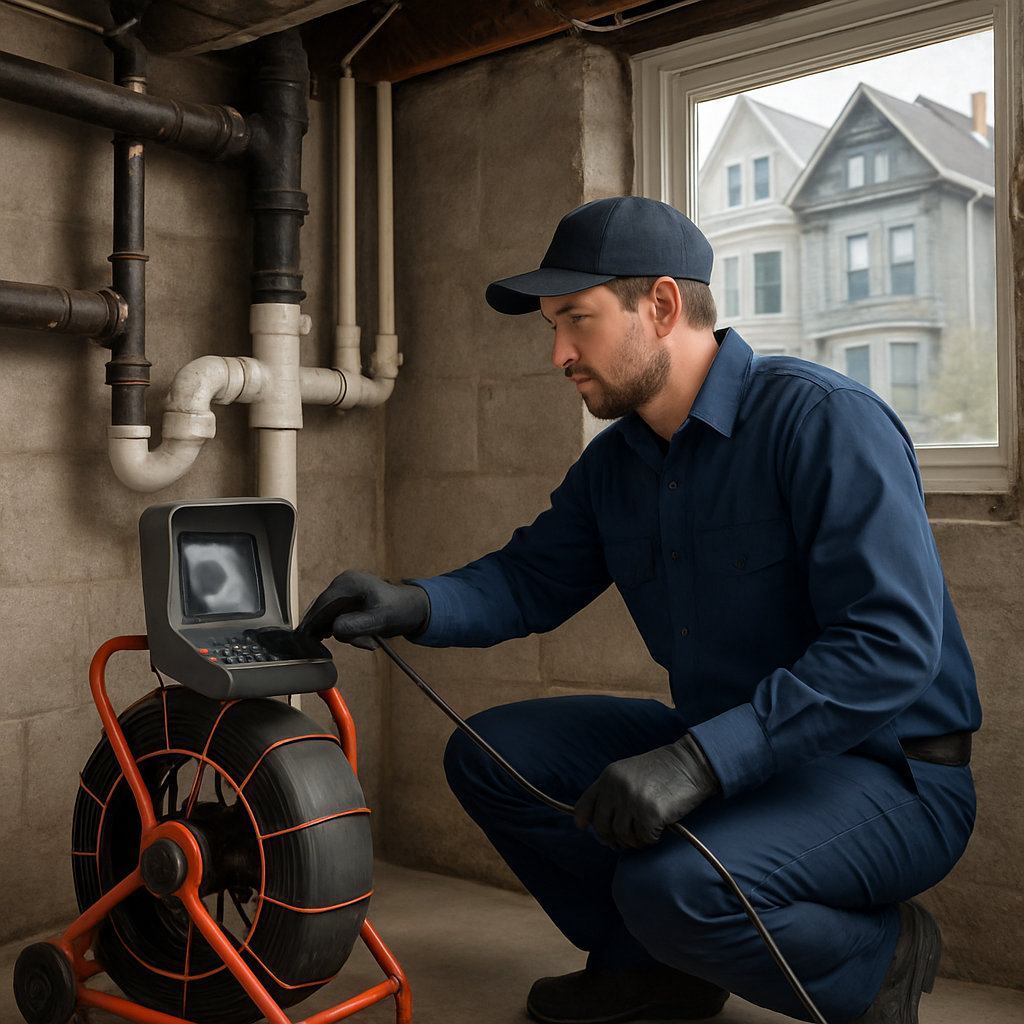
Housing stock drives what you actually call a plumber for. Portland has many older homes with galvanized or clay pipes, which means service calls frequently turn into larger jobs: video camera inspection followed by trenchless repair or partial repipe. Expect a visit to uncover discoveries that change scope and cost — good contractors surface those risks early and document permit needs.
What matters to expect from local plumbers
- Transparent scope changes. A reputable Portland plumber will give a written change order when a hidden problem appears rather than just charging extra after the fact.
- Permit handling. Contractors who decline permit work are cheaper on the front end but leave you exposed to inspection failures and resale issues.
- Practical emergency availability. Many firms advertise 24-hour service; ask whether that means a phone triage with a referral or an actual Portland crew dispatched the same day.
- Parts sourcing and delays. Local supply constraints affect lead times for items like tankless water heaters and special valves — expect a multi-day delay for uncommon parts.
Trade-off to accept. If you want lowest initial price, expect a higher risk of incomplete paperwork, minimal warranties, and scheduling delays for permit inspections. If you want speed and full-code work, expect to pay for crews who specialize in permit-driven jobs and emergency dispatch.
Concrete example: A homeowner finds a slow-growing slab leak under a 1920s bungalow. A first visit should include a video camera inspection and an estimate that separates permit fees, trenchless versus open excavation options, and a warranty for repiping if chosen. Choosing a contractor who handles permits and pulls inspections usually costs more up front but prevents a failed inspection and rework later.
Expect diagnostic visits in Portland to reveal additional work about 30 to 40 percent of the time on older homes; plan budgets and timelines accordingly.
How we compared plumbing companies: methodology and criteria
Bottom line: we scored portland plumbing companies on factors that change your final cost, repair timeline, and legal exposure — not on marketing or fluffy review counts.
What we measured and why
Core criteria: Each company was evaluated on licensing and insurance verification, range of plumbing services Portland offers, emergency plumbing Portland capability, pricing transparency, warranty terms, and recent customer issue patterns across public records.
- Data collection: We pulled license and complaint records from the Oregon Construction Contractors Board and permit histories from the City of Portland BDS.
- Service mapping: Mapped advertised offerings against real requests customers make in Portland – from drain cleaning Portland and sewer line repair Portland to tankless water heater installation Portland and trenchless sewer repair Portland.
- Price benchmarking: Used published ranges from HomeAdvisor and Angi then validated with supplier quotes and sample estimates from local firms to spot outliers.
- Reputation scan: Looked at BBB complaint records, recent Yelp trends, and whether companies respond publicly to negative feedback or document before and after photos.
- Field validation: Called as a prospective customer to test phone triage, emergency response promises, and whether the company asks for details needed to produce an accurate estimate.
- Weighted scoring: Assigned heavier weight to licensing, emergency response reliability, and written warranty commitments because those are the items that most often reduce downstream cost and risk.
Tradeoff that matters: favoring the lowest price tends to shift risk to you in the form of missing permits, thin warranties, or surprise change orders. Prioritize different criteria depending on whether you are managing a one off toilet repair or a full repipe project that requires permits and inspections.
Concrete example: A property manager in Southeast Portland had a 2am sewer backup. Three companies were contacted. The fastest responder provided phone triage, a clear after hours rate, and an ETA for a local crew. The lowest quoted option arrived slower and then required a separate permited repair after a camera inspection, which extended timeline and cost. The option that balanced clear emergency pricing with permit handling completed the full repair with fewer billing surprises.
Judgment call: national franchise branding often promises 24 hour service, but in practice local crew allocation and subcontracting determine actual response. For urgent calls, verify whether the company will send an in city crew or only provide a referral; that difference decides if you get help within hours or days.
Key action for callers: ask for a CCB number, an estimated total range not just a service call fee, and whether permits will be handled before you authorize work.
Company profiles and side-by-side comparison
Practical comparison: focus on who actually shows up, who handles permits, and how the company prices surprises. Below are concise profiles for four commonly hired options in Portland and a compact side-by-side so you can see the tradeoffs at a glance.
River City Plumbing: Local licensed contractor with advertised services spanning residential and commercial plumbing, trenchless sewer repair, water heater work, and emergency plumbing Portland. Practical strength: familiarity with City of Portland permit workflows and local supply channels. Pricing notes: company posts service pages and offers written estimates; confirm whether a quoted range includes camera inspection or permit fees. Verify registration and service examples at River City Plumbing.
Roto-Rooter Portland: National brand with established capacity for sewer line repair, high-pressure water jetting, and 24-hour responses in many markets. Practical strength: deep inventory for mainline and commercial jobs. Tradeoff: national dispatch models can produce consistent equipment availability but variable local crew allocation; confirm whether a Portland-based crew will respond or a subcontractor is used.
Benjamin Franklin Plumbing Portland: Franchise known for appointment windows and clock-in guarantees. Practical strength: predictable arrival windows for scheduled service calls. Tradeoff: franchise locations vary in how they price after-hours or large permit jobs—ask for written scope if the job could expand beyond a simple repair.
Mr. Rooter Plumbing Portland: Local franchise network with routine drain cleaning, faucet and toilet repair, and advertised emergency coverage. Practical strength: useful for routine clogged drain services Portland and small residential repairs. Tradeoff: for complex sewer or repipe work, verify experience with trenchless methods and permit-heavy jobs before hiring.
| Company | Emergency availability | Typical strengths | Pricing notes | What to verify before hiring |
|---|---|---|---|---|
| River City Plumbing | Local dispatch; advertised emergency service | Permit handling, trenchless sewer repair, water heater repair | Written estimates; confirm camera inspection inclusion | CCB registration, example before/after photos, permit handling |
| Roto-Rooter Portland | Often 24-hour national dispatch | Hydro jetting, mainline sewers, commercial jobs | After-hours premiums common; ask about subcontracting | Which local crew responds, warranty details, itemized scope |
| Benjamin Franklin Plumbing Portland | Scheduled windows plus some emergency coverage | On-time service calls, routine residential repairs | Flat-fee appointment options; check for change-order rules | Clarify permit responsibility and scope expansion pricing |
| Mr. Rooter Plumbing Portland | Local franchise emergency options | Clogged drain services Portland, faucet/toilet repair | Competitive on small jobs; higher bids for complex work | Experience with trenchless methods, parts warranty |
Practical insight: national brands bring scale for big equipment and after-hours rosters, but local companies typically win on permit knowledge and faster in-city crew response. For permit-heavy repairs or jobs in older homes, that local familiarity cuts rework risk — which matters more on a $5,000 repipe than on a $150 clogged drain call.
Concrete example: a homeowner with a recurring basement mainline clog learned that a simple snaking visit would be temporary. The local contractor performed a camera inspection, found root intrusion, and offered a trenchless section repair with a permit. The national responder quoted fast hydro jetting that cleared the symptom but had no permit option on the first visit; the problem returned within months.
Check two things first: the company will pull required permits for the scope you expect, and the estimate includes a separate line for camera inspection. Those two items reduce surprise downstream costs.

Portland price guide: realistic ranges for common services and what influences cost
Straight answer: expect wide ranges — small jobs can be a few hundred dollars, major sewer or repipe work runs into the thousands. The deciding factors are access, materials, permit needs, and whether you call for service during regular hours or as an emergency.
Typical Portland ranges (ballpark)
- Service/diagnostic visit: $100–$350 — some companies waive this with job acceptance
- Clogged drain (snaking): $150–$400 — simple bathroom sink or tub vs kitchen mainline
- Toilet repair or replacement: $120–$450 depending on parts and flange work
- Faucet installation: $150–$450 depending on fixture type and access
- Garbage disposal install/replace: $200–$700 depending on unit and electrical work
- Water heater repair: $200–$900 (parts-heavy jobs increase quickly)
- Tank water heater replacement: $900–$3,500 (tank size, venting, and permit work raise cost)
- Tankless water heater install: $2,000–$6,000 (gas line work or electrical upgrades add cost)
- Video camera inspection: $150–$600 — recommended before major sewer work
- Hydro-jetting: $300–$1,200 for heavy root or grease removal
- Trenchless sewer repair: $3,000–$12,000 (length and pipe condition matter)
- Open-trench mainline replacement: $5,000–$20,000+ depending on depth, landscaping, and driveways
- Whole-house repipe: $6,000–$20,000 depending on pipe type and number of fixtures
- Slab leak detection/repair: $500–$6,000+ depending on access and repair method
- Sump pump installation: $600–$1,800
Cost drivers to watch: physical access (flooring, landscaping, or crawlspace tightness) and material choice (copper versus PEX) are the fastest ways estimates diverge. Permit and inspection fees in Portland add both time and explicit cost; contractors who handle permits typically include permit labor on the estimate but you should still see a separate line for permit fees.
Tradeoff that matters: paying for a camera inspection up front often reduces total cost on drain and sewer problems. In practice, the extra $200–$500 for a camera will frequently save you unnecessary snaking trips, missed root sections, or a premature full-line replacement.
Concrete example: a Southeast Portland house with recurring kitchen backups paid $275 for a camera inspection that revealed a 10 foot root intrusion. The contractor quoted $3,200 for a targeted trenchless section repair plus permit; repeatedly paying $175 for temporary snaking would have exceeded the repair cost inside a few months and left the line failing at resale inspection. Choosing the inspection first clarified scope and limited the permitting work needed.
Practical limitation: itemized estimates are only as useful as the assumptions behind them. If a quote lists a flat rate for pipe replacement without describing access or material allowances, expect change orders when crews open walls or slabs. Demand clear assumptions in writing and a stated contingency process for hidden issues.
Tip: ask for a written range (low to high) rather than a single number, and require separate lines for camera inspection, permit fees, labor, and parts.
How to evaluate quotes and avoid surprise charges
Key point: most billing surprises follow from assumptions that were never written down — access, permits, parts upgrades, and after-hours work. Treat the estimate as a contract draft: if it does not state assumptions, exclusions, and an approval process for extras, expect change orders.
A compact rubric for reading any Portland plumbing quote
- Scope and assumptions: Does the estimate describe exactly what will be inspected and repaired, and what is excluded? Look for specific statements about walls/floor removal, slab work, or root remediation.
- Price structure: Is the work billed as a flat price, hourly with a clear rate, or hybrid? Check whether parts are billed at cost, cost-plus, or with a fixed markup and ask for an example part line.
- Permit and inspection handling: Who pulls permits and pays the City fees? If the contractor handles permits, require a separate line for permit labor and fee estimates — see City of Portland BDS for permit guidance.
- Change-order rules: What dollar threshold requires homeowner approval? Insist that any additional work be documented and signed before crews proceed.
- Emergency and after-hours fees: Ask for the explicit surcharge schedule and when it applies (phone triage versus dispatched crew).
- Warranty and cleanup: Confirm labor and parts warranty lengths and whether site restoration (patching drywall, replacing flooring) is included.
Practical trade-off: flat rates reduce billing uncertainty for well-defined jobs but often include a risk premium for unknowns; hourly pricing can be cheaper for very small, accessible repairs but becomes expensive when hidden conditions appear. For permit-heavy jobs, pay the premium for a clear, itemized flat quote that documents permit handling — it limits rework and inspection failures.
Concrete example: A homeowner accepted a low advertised price for a tankless water heater install without confirming gas line work. When the crew opened the utility chase they found undersized gas piping and added a gas line upgrade and permit. The final invoice was 35 percent higher. The same job done with a contractor who listed gas-line contingencies and permit fees in the estimate avoided that surprise and completed inspections without a second visit.
Request a written threshold for change orders (for example, no extras over $250 without signed approval) and require itemized final invoices showing parts, labor hours, permit fees, and any applied surcharges.
Five step decision checklist and script to use when calling for a quote
Start with verification. Tell the caller your address and the immediate symptom, then ask for the company name, the technician ETA, and their CCB registration number. If they hesitate or refuse the CCB number, end the call. Verify the number on the Oregon Construction Contractors Board before you book.
Five quick steps and exact lines to use
- Step 1 — Verify legal standing and who shows up: Say, I have a leak at [address]. Are you licensed in Oregon and can you give me your CCB number and insurer? Who will be dispatched from your Portland crew? Listen for a direct CCB number and a named local crew or technician ETA.
- Step 2 — Triage, ETA, and emergency pricing: Say, Can you triage this now? If you dispatch a crew, what is the ETA and what after-hours surcharge applies? Practical insight: phone triage is cheap; an actual Portland crew showing up within hours is not — expect to pay for that reliability if you need it fast.
- Step 3 — Insist on an itemized inspection estimate: Say, Please email a written estimate before work starts showing camera inspection, permit fees, parts markup, and labor rate. If the problem is sewer or recurring clogs, explicitly ask for a camera inspection first.
- Step 4 — Confirm warranty, cleanup, and permits: Say, What labor warranty do you provide, do you handle permits, and do you include site restoration? Please put warranty length and permit responsibility on the estimate. Remember: longer labor warranties and permit handling reduce rework risk but raise upfront cost.
- Step 5 — Set authorization rules and pick tie-breakers: Say, I authorize work up to $X; any extras need my signed approval. If two quotes are similar, I will prioritize permit handling and warranty over the lowest price. Use permit handling, clear warranty, and response time as your tie-breakers.
Trade-off to accept. In real emergencies you will often pay a premium to stop damage immediately. If you choose speed, require written follow-up with a full itemized invoice and the CCB number for any subsequent insurance claim or dispute.
Concrete example: A renter called two Portland plumbers for a 2am sewer backup. One offered immediate dispatch but only a verbal scope and no camera inspection; the other scheduled a slightly later crew but provided a written estimate that included camera inspection and permit handling. The written-quote option identified a localized root intrusion and completed a trenchless repair with one permit visit; the immediate responder cleared the line temporarily and returned twice, increasing total cost.
When you call, require the CCB number on the emailed estimate and set a change-order threshold (for example, no extras over $250 without written approval). That single rule prevents most billing surprises.
Final judgment: Don’t be lured by the cheapest immediate answer. For small, known fixes an hourly crew can be fine; for anything that might involve cameras, permits, or slabs, insist on a written, itemized inspection estimate and prefer the provider who documents permit handling and warranty on that estimate. Choose certainty over a lowball verbal promise.
Why readers might choose River City Plumbing and how to validate the choice
Direct reason to consider River City Plumbing: they present as a locally licensed Portland contractor that advertises permit experience, trenchless sewer work, and emergency service. That combination matters when a job is likely to trigger City of Portland inspections or when fast in-city response reduces damage.
Reality check: local familiarity reduces rework risk on permit-heavy jobs, but it is not proof of consistent execution. Your objective is to trade marketing claims for verifiable evidence – permit records, job photos, documented warranties, and named technicians on the estimate.
Concrete validation steps to use before you book
- Confirm registration and recent permits: Look up the contractor on the Oregon Construction Contractors Board and search the City of Portland permit portal for recent permits pulled in their business name. A pattern of closed permits for similar jobs is strong evidence they understand local inspections.
- Match claimed work to documented jobs: Ask for a recent job example on their site or in email that includes before and after photos, permit number, and the final inspection date. Check the example against the images and the permit record – photos without permit numbers are only marketing.
- Get the technician name and qualifications: Require the name of the technician who will attend and any specific certifications for tasks like gas line services or backflow prevention. If the company uses subcontractors, get that in writing so you know who is actually doing the work.
- Verify equipment for large jobs: For commercial or major sewer work, confirm they own or can source the required equipment – hydro jetter capacity, camera inspection rigs, or trenchless tools – rather than relying on a vendor callout that delays the job.
- Demand documentary warranty and permit-close proof: Ask the estimator to email the labor warranty in writing and to supply the permit number after work is closed. A contractor who resists writing warranty terms or providing permit closure proof is a practical red flag.
Practical tradeoff: River City Plumbing may be faster at dispatch and better at navigating Portland BDS rules than a national chain, but local shops sometimes lack spare inventory for unusual parts. If a job requires uncommon valves or a specific tankless model, confirm lead times and whether the quoted price assumes a common-replacement part.
Concrete example: A homeowner had a failing water heater and contacted River City Plumbing after finding a similar replacement on their services page. The company provided a written estimate that listed the permit, the installer name, and the labor warranty; they also emailed photos of the completed install and the final inspection entry. That documentation avoided a delay when the buyer required proof of permitted work at closing.
Judgment: treat River City Plumbing like any local contractor – worth prioritizing when permit know-how and fast in-city crews matter, but require the same verification steps you would for a national brand. Don’t accept general assurances – demand permit numbers, technician names, documented warranties, and concrete job examples before you authorize work.
Next steps: how to get a reliable quote and what to expect after you book
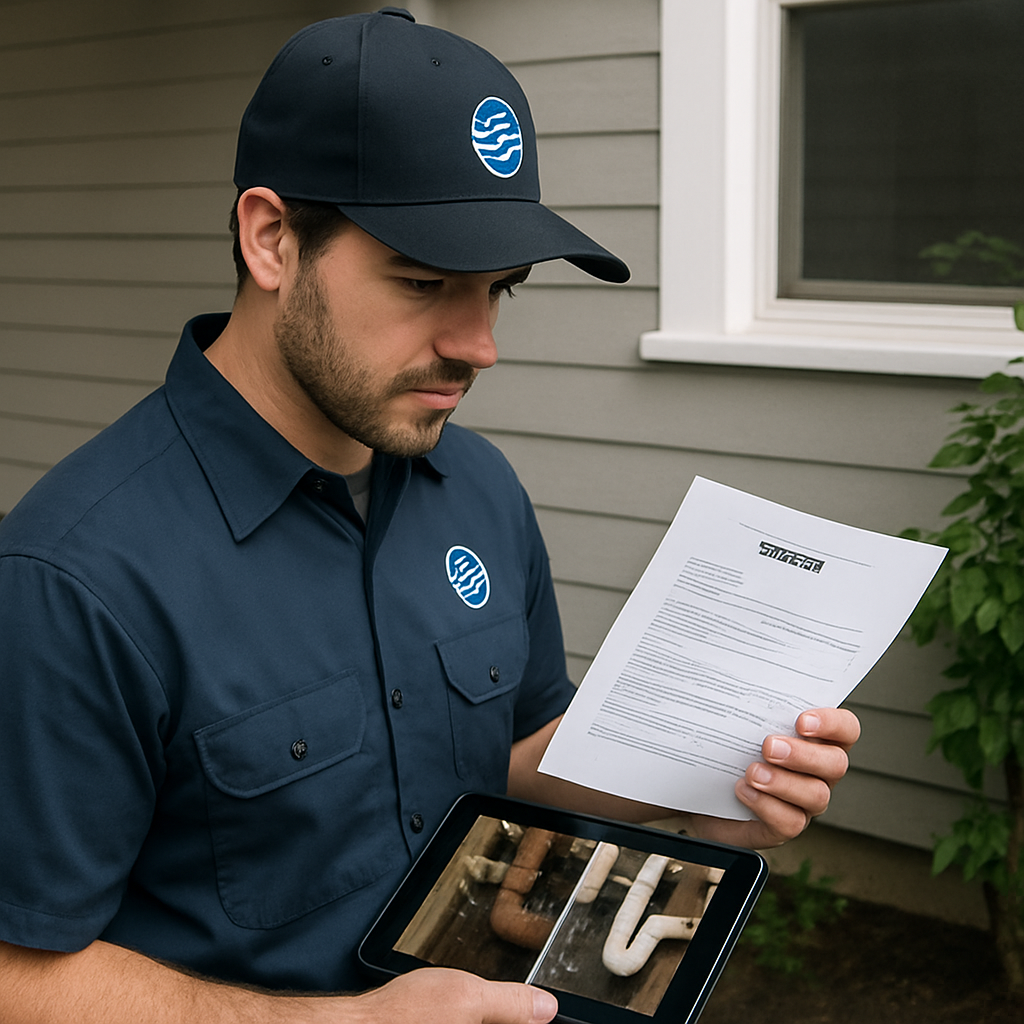
Start with a two-step approach. Demand a paid diagnostic phase (inspection, camera work, written findings) before any repair authorization so the quote you get is based on facts, not guesses. This forces the contractor to separate discovery from repair work and makes the estimate meaningful.
What to prepare before the visit
Practical prep saves time and money. Put together three things: 1) clear photos or short video of the symptom area, 2) appliance ages and model numbers (water heaters, disposals, pumps), and 3) a list of recent plumbing work or recurring problems. Clearing access (remove stored items from under sinks, open basement gates) is the simplest cost-saver.
If you want accuracy, pay for a focused diagnostic: camera inspection or leak detection first. It usually costs less than repeated visits and avoids change-order surprises.
What a reliable quote should look like. After the diagnostic the estimator should email a written offer that lists: scope (what will be fixed), line items for labor and parts, any assumptions about access, expected timeline, and an approval threshold for extras. Don’t accept a verbal price that omits contingencies for hidden conditions.
Trade-off to consider. Paying up front for rapid parts procurement or an expedited crew reduces the chance of water damage but increases your bill. If the plumber offers two timelines, choose the slower option for routine work and the expedited one only when stopping damage or outages matters more than cost.
Concrete example: A Northeast Portland homeowner sent three photos and model numbers for a leaky water heater. The plumber performed a $175 diagnostic with a camera and pressure test, then emailed an itemized estimate that included the replacement thermostat and a modest repair contingency. Because the scope was clear, the crew completed install the next day and the final bill matched the estimate within 8 percent.
What happens after you book. Expect a short timeline: scheduling confirmation, diagnostic visit (if not already done), permit initiation when required, and a scheduled repair date. Lead times for specific parts or tankless units can add days; ask your contractor to confirm parts availability before finalizing the schedule.
If something goes wrong after the job. Use the written estimate and the post-job invoice as your evidence: photograph the defect, email the contractor a description, and request a return visit under the warranty terms written on your invoice. If the contractor refuses to honor the documented warranty, escalate with consumer channels in Portland.